
Drop Mate Product | Startup NDA Project
Skills: 3D modelling, Rapid Prototyping, Design Thinking, UX Design
The Problem:
Ophthamologists
are having trouble properly disinfecting equipment and eyedrops while seeing their patients.
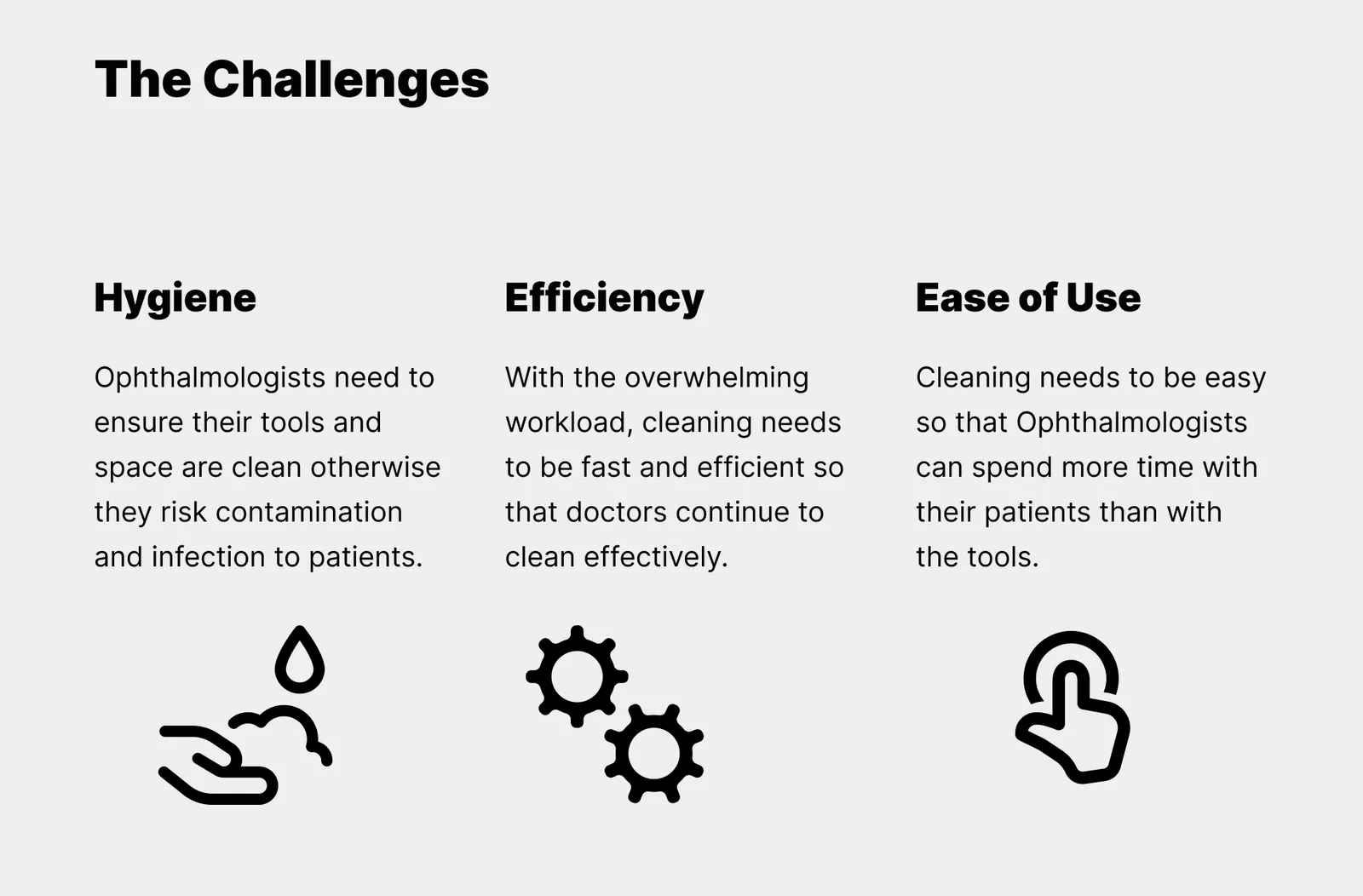
Drop Mate is developing a product to address two compounding problems in ophthamologists' offices:
- Difficulty properly disinfecting equipment between patients
- No standardized hygiene workflow for eyedrop products in high-volume clinical settings
Who Would Use This?
This product was initially focused towards elderly folks as a way to disinfect any eyedrop products they currently own. As more research was done, a pivot was made to focus on:
The target user shifted during the project:
- Initial focus - elderly individuals needing help disinfecting personal eyedrop products
- Pivot - ophthamologists' offices, where high patient volume makes maintaining hygiene standards consistently difficult
The Tools/Approach
The project was originally drafted to be an object in the office of the Ophthamologists’ office, but I was brought on to help design how this product would look and operate.
We started with references of what current offices have to take advantage of skeuomorphic design when building.
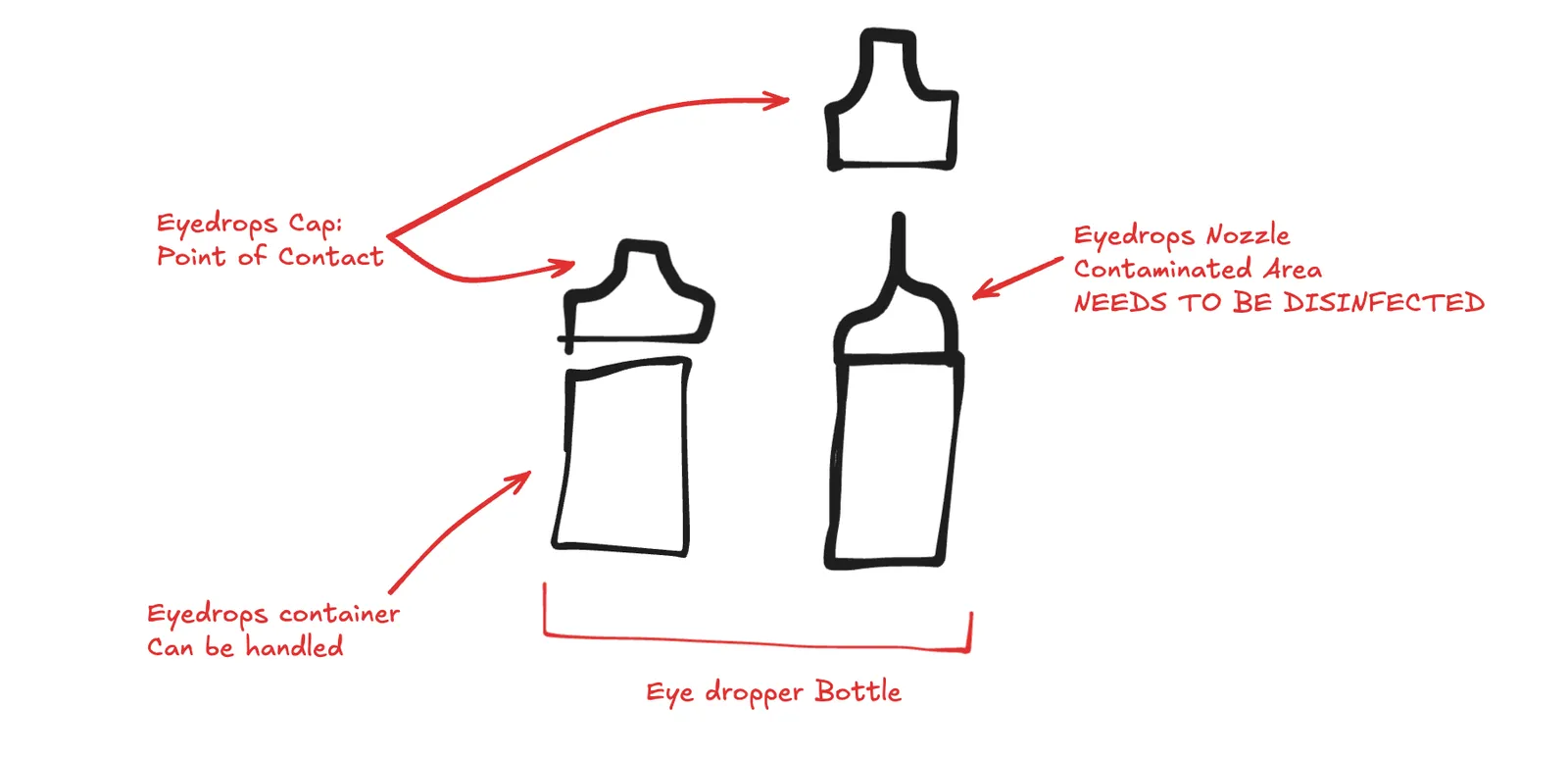
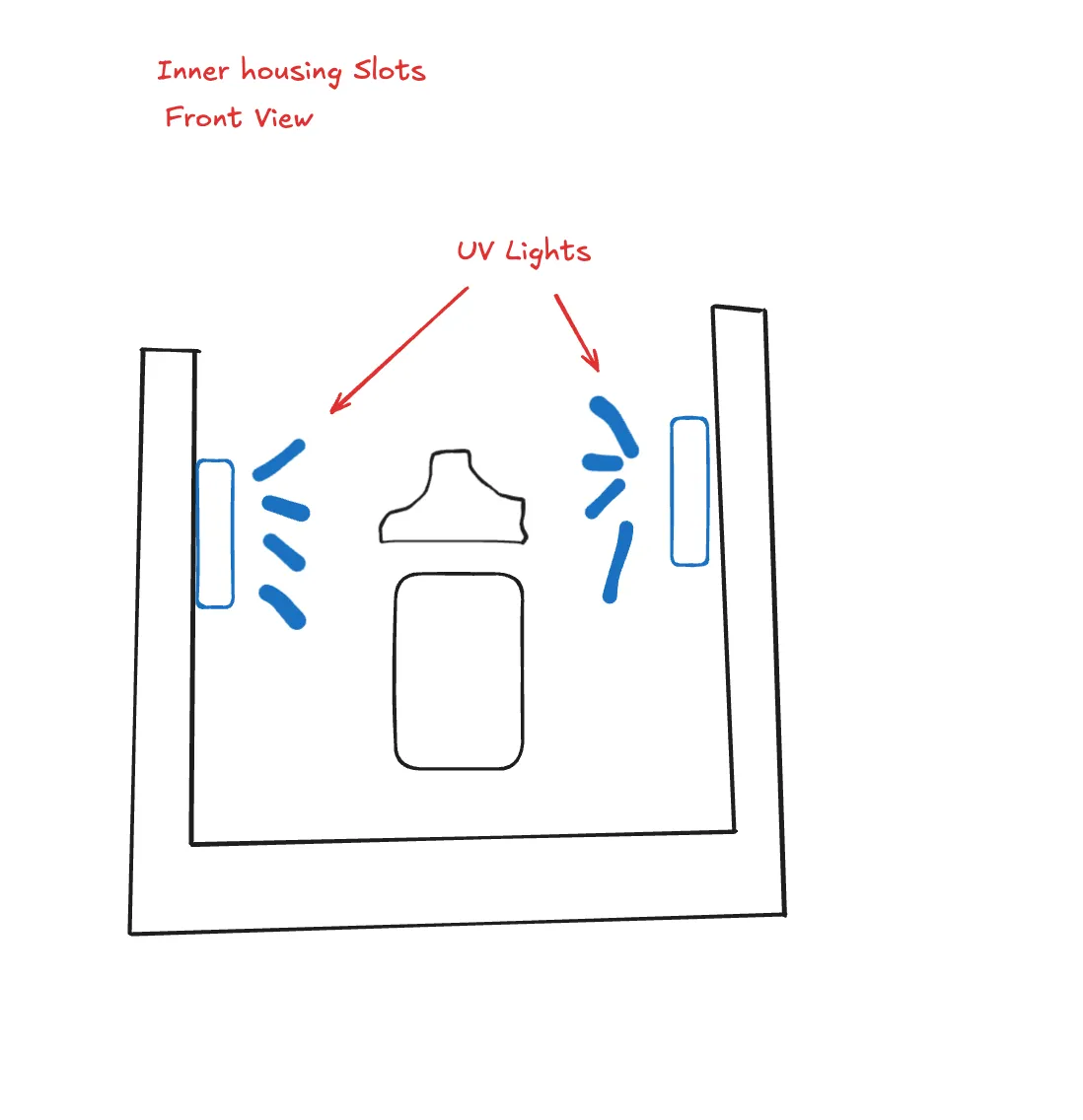
Early sketches explored two critical variables:
- UV light effectiveness - coverage, intensity, and placement within the enclosure
- Product placement - how eyedrops and tools would be positioned for optimal exposure
Adapting our Approach
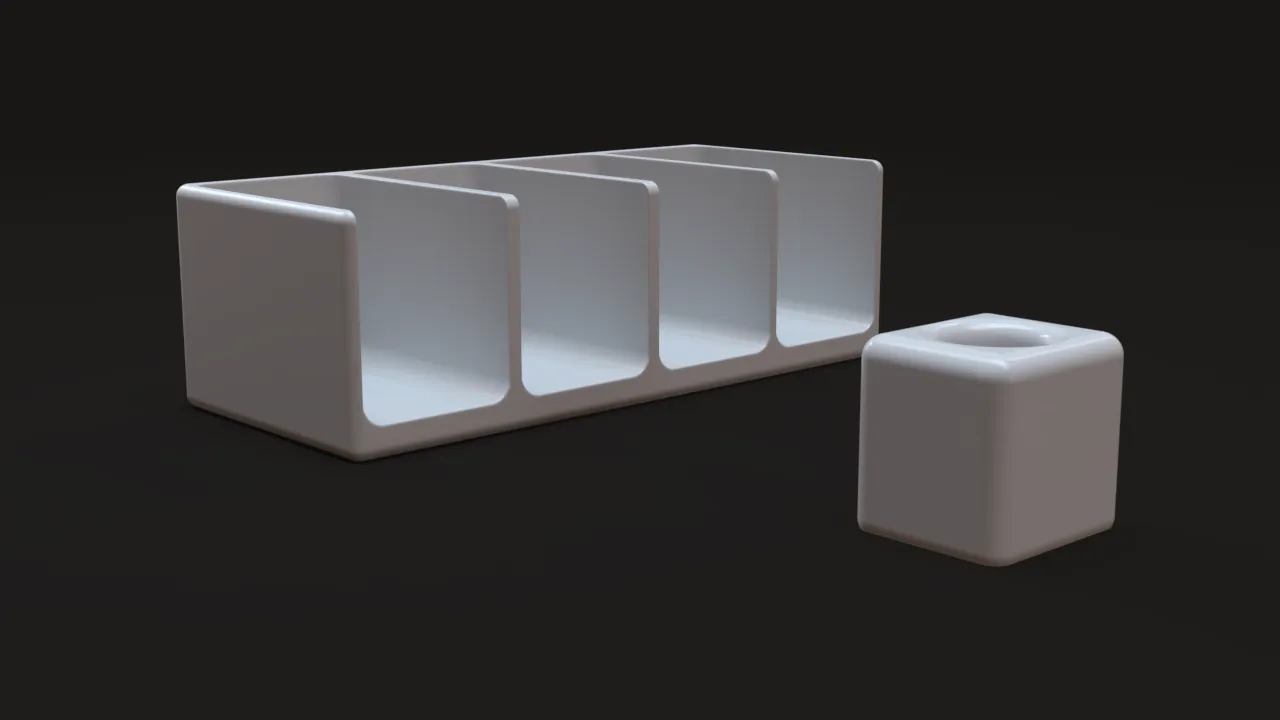
As we moved forward through the prototyping process, we moved forward with modular design for the sake of ease of use and being more efficient with cleaning each product.
As prototyping progressed, three priorities shaped the direction:
- Modular design - easier to clean individual components and swap configurations
- Hygiene integrity - every structural change was evaluated against cleaning effectiveness
- Ease of use - reducing friction for clinical staff operating the device between patients
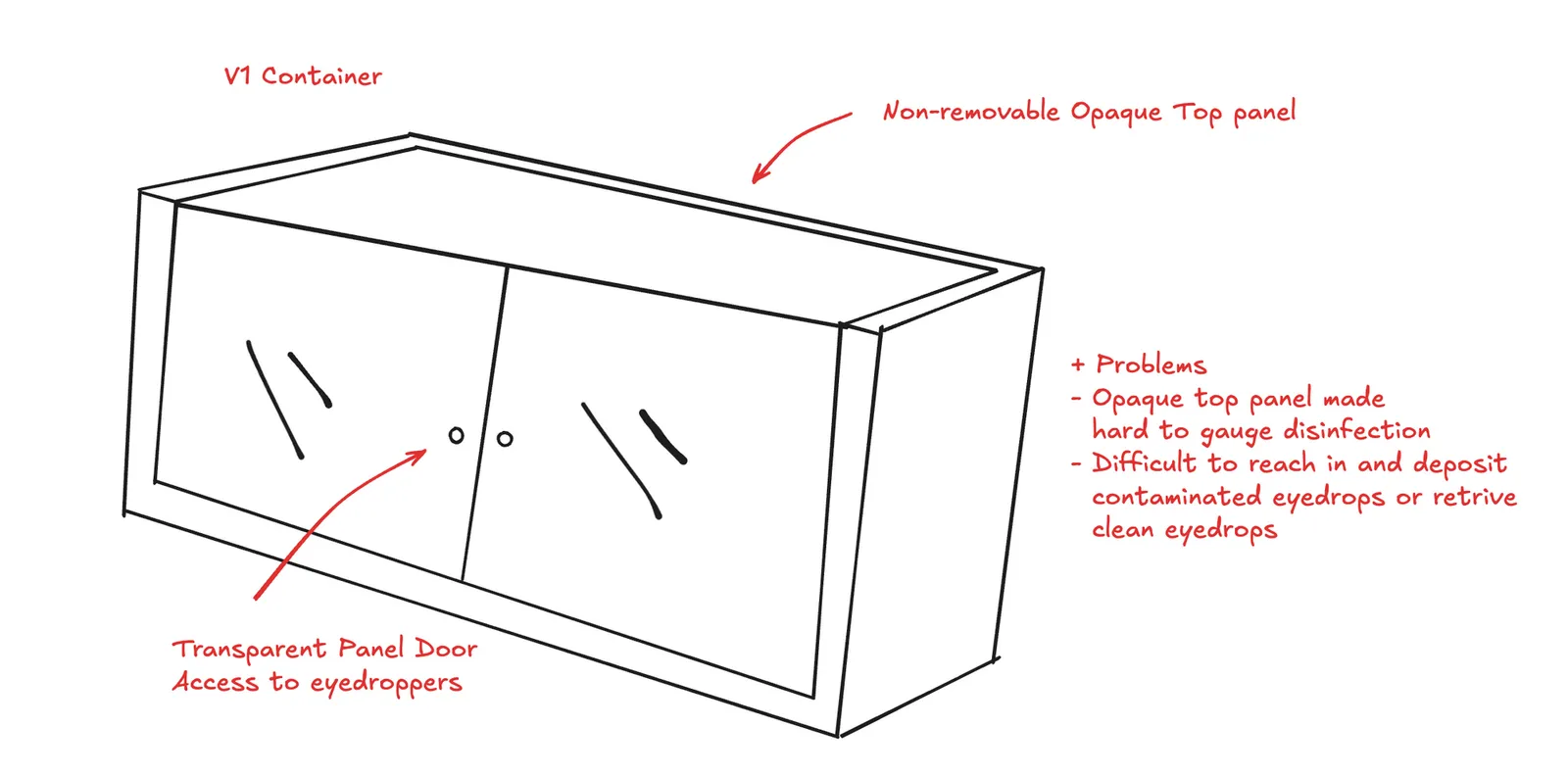
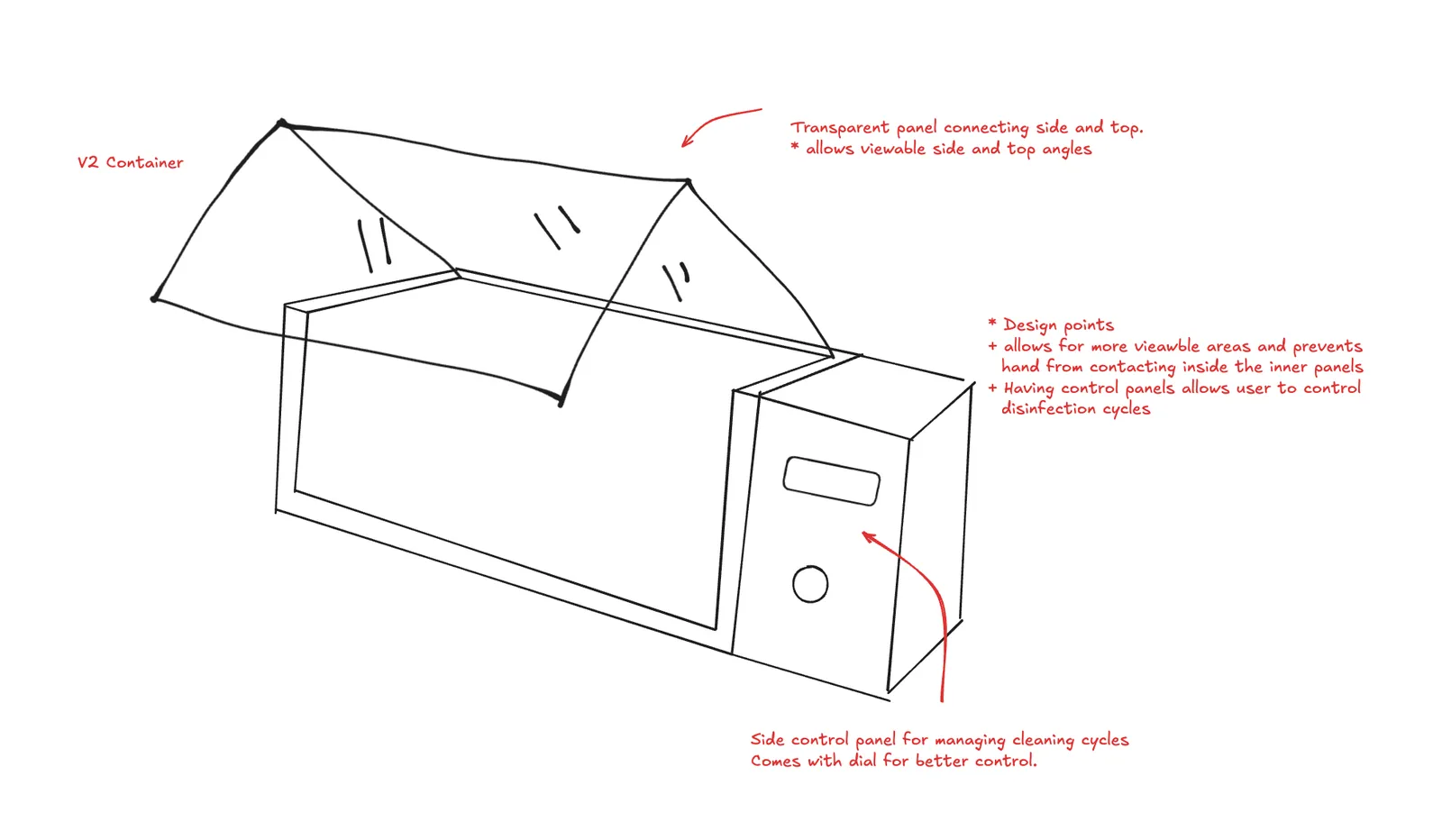
Early Prototypes/Proof of Concept
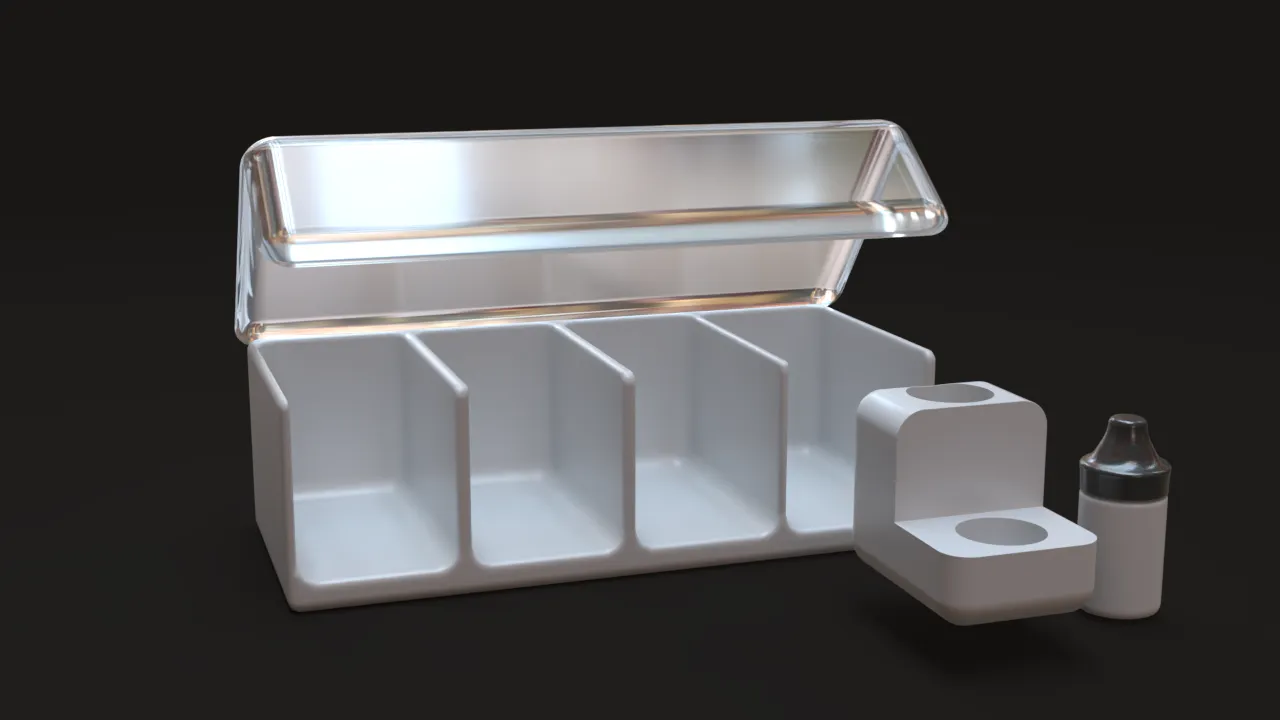
In order to accurately demonstrate certain design functions and features, I used Womp to quickly mockup a simple container that could host multiple Ophthamologist tools using the founder and engineers’ input. We opted for modular design and to have space for multiple items to be cleaned at once. We created ample space for UV lights to clean all parts of the tools requiring disinfection and designed it around different materials we would use to assist in that cleaning.
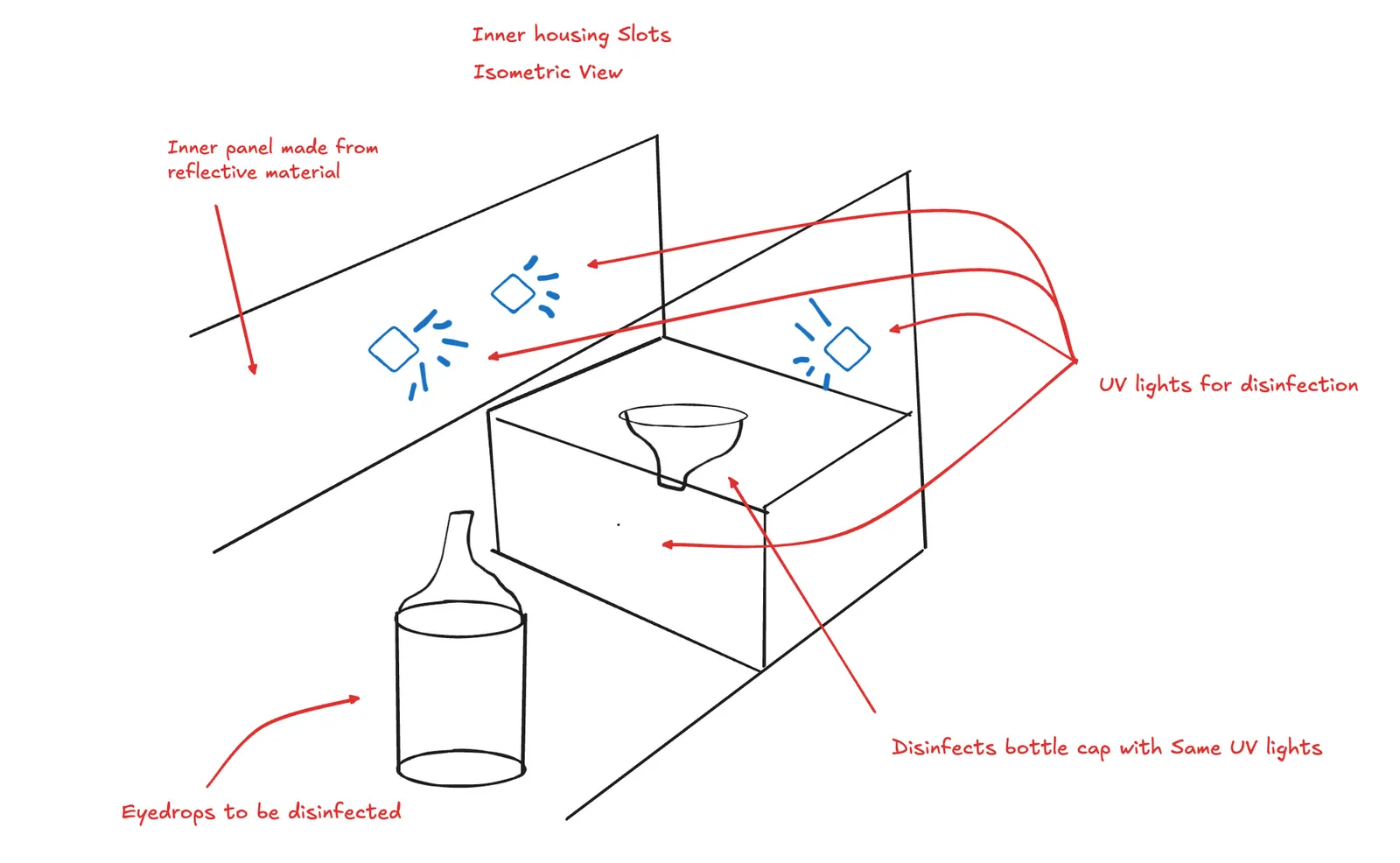
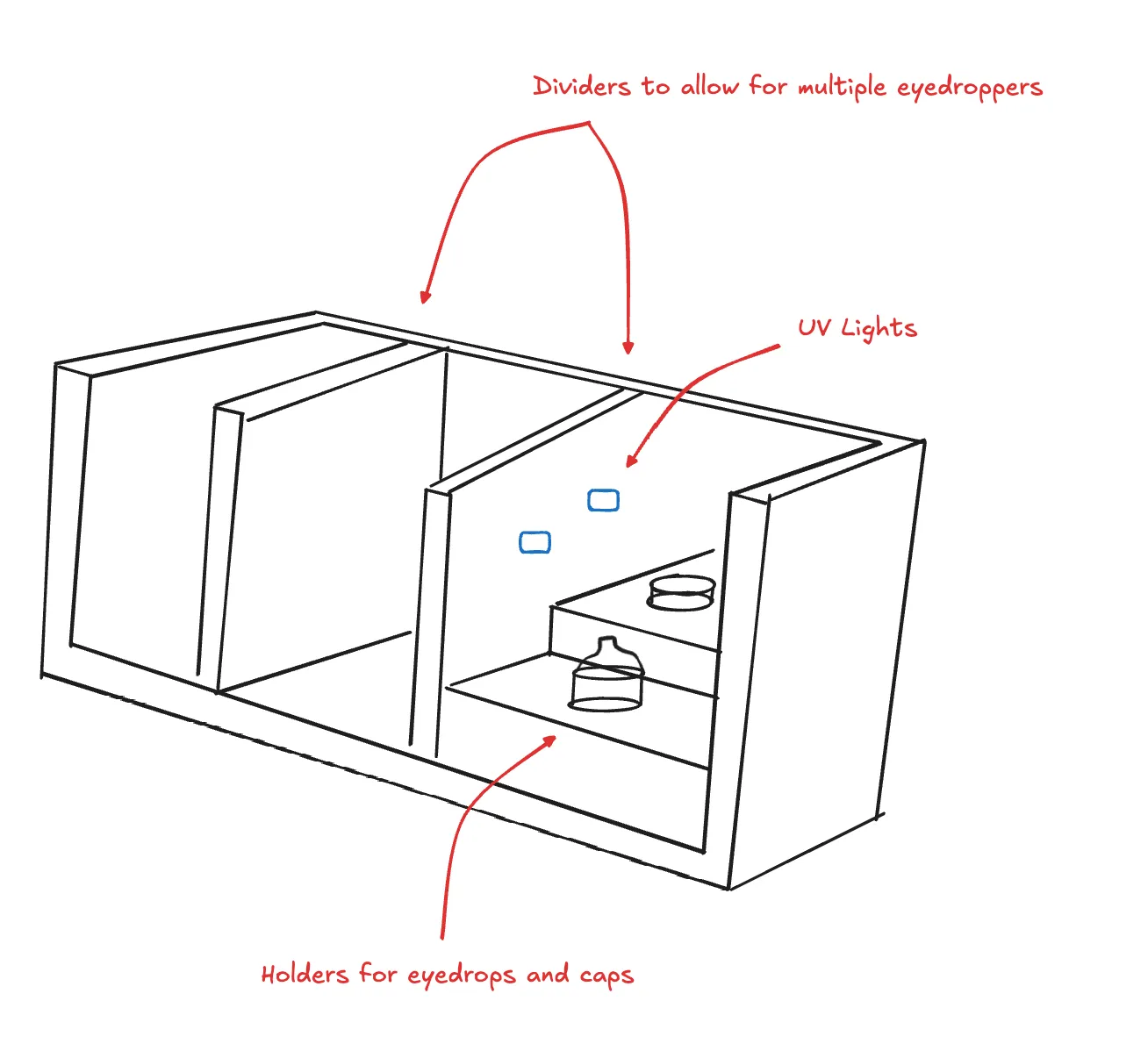
Design Challenges
Due to the nature of the NDA, im only allowed to show very early 3D prototypes, but the goal was to create a simple form factor to fulfill all the alleviate all the challenged mentione previously for the Ophthamologists. This is the extent of the work I had consulted on for the physical prototype. It was a practice in balancing modular design, hygiene functionality, ease of use and physical interaction.
Digital UX
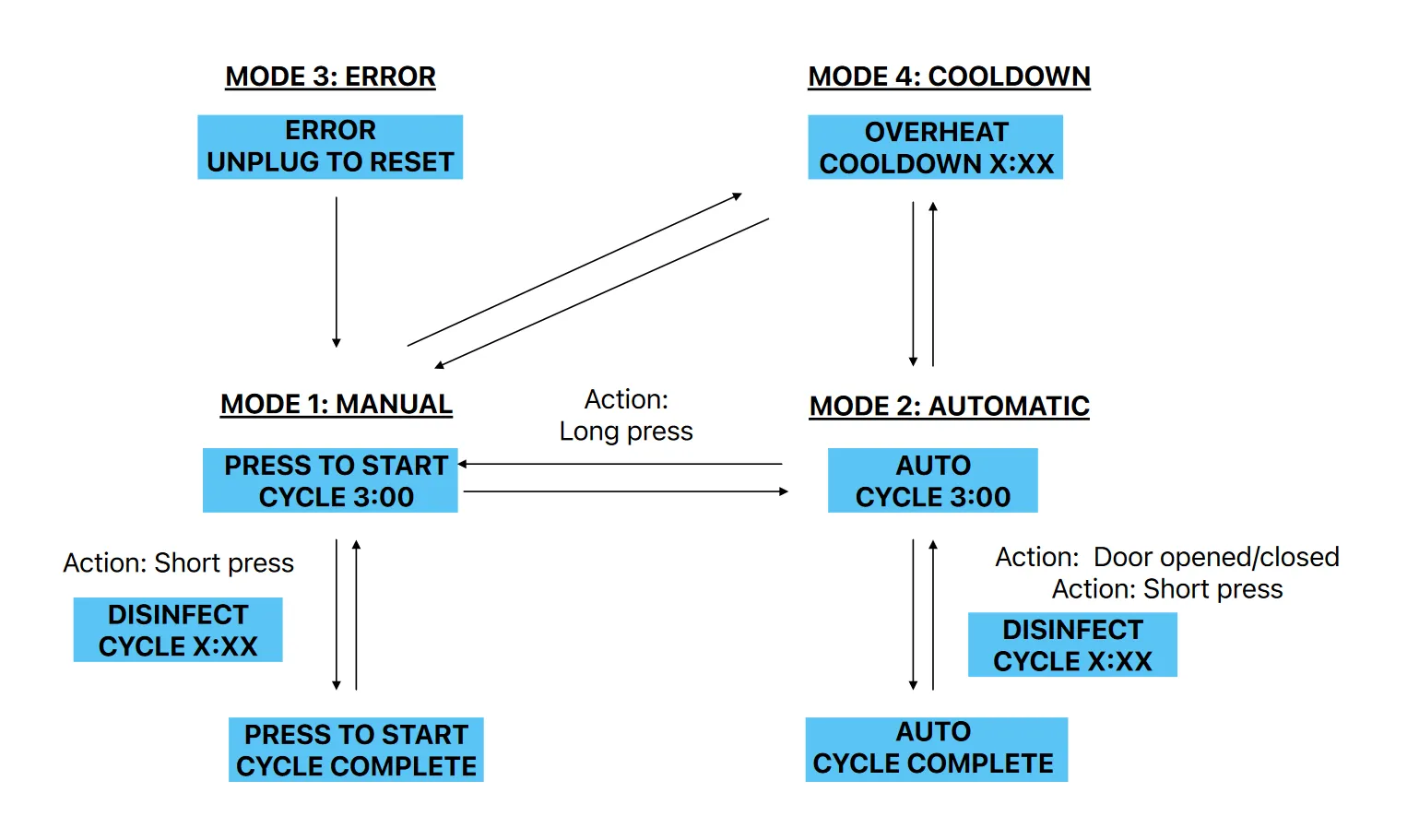
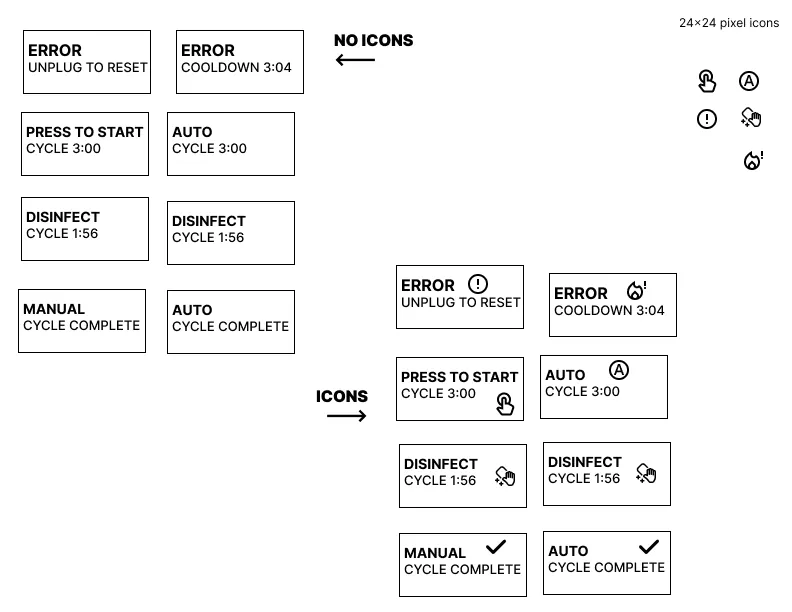
Moving onto the next portion I had my hands on were the on-screen displays to communicate the status of this machine. On the left you can see the basic 4 modes that needed to be communicated on a 128x64 OLED display. I was tasked with optimizing the user experience within the constraint of the display. The right image had my adjustments to the potential screens.
Working with Constraints
Adjustments made after engineer feedback:
- Rewrote Cycle Complete messaging on Mode 1: Manual to clearly prompt the next user action
- Removed misleading "press start" language post-cycle, aligning the flow with how the device actually operated
- Added clear icons to reinforce status communication and strengthen skeuomorphic design consistency
Drafting and Testing
User testing was not conducted during this engagement due to timeline and access constraints. The product was still in early prototyping stages, and direct access to ophthamologists for structured testing was outside the project's scope at the time.
Had testing been possible, the priority questions would have been:
- Physical prototype - Does the modular form factor fit naturally into an ophthalmologist's existing workspace without disrupting patient flow? Is the UV cleaning cycle duration appropriate for a high-volume office setting?
- Digital UX - Can a user correctly interpret the OLED display states under clinical lighting conditions without prior instruction? Does the updated messaging reduce ambiguity on mode transitions like Cycle Complete?
- Hygiene confidence - Does the design communicate cleanliness effectively enough that practitioners trust the output without additional verification steps?
These questions would have driven the next iteration of both the physical and digital design.
Current Stage
This product is still being worked on and I am not able to share anymore about the product. Our goal is to help Ophthamologists create a easy to use and clean workspace for all their tools. All designs are not final and do not reflect the final product.