
404-GEN
Skills: Blender, Spline, Davinci Resolve, Touchdesigner
Overview / The Problem
404-GEN is a technology studio building the largest open-source library of AI-generated 3D models, with over 6 million assets. Their Blender add-on gave 3D artists and game developers direct access to that library -- but conversion was low. The product had real capability and no audience.
The stakes were higher than a typical launch. 404-GEN's revenue ran through Bittensor, a decentralized AI network where user adoption directly drove model generation and network rewards. Low adoption wasn't just a growth problem. It was a revenue problem.
I was brought in as a 3D design consultant to close that gap:
- Design and launch storefronts across Gumroad, Unity Store, and Blender Market
- Produce marketing content to drive awareness and adoption
- Explore new use cases to identify angles that would actually convert
.
404.xyz
doc.404.xyz/sn17-whitepaper
The User
404-GEN had two distinct user groups that needed to work in parallel.
Primary Users: 3D Artists and Game Developers. The core audience was 3D artists and game developers looking to cut the time and cost of asset creation. For them, the value proposition was straightforward: a free, AI-generated 3D model library that slotted directly into their existing Blender, Unity, or XR pipelines. These were the users who needed to be sold on the product. Without their adoption, the system had no purpose.
Secondary Users: Miners and Validators. Behind every model was a decentralized network of contributors:
- Miners ran the compute that generated 3D models from text prompts
- Validators assessed each model's quality, scoring against accuracy and visual fidelity before it ever reached an artist
This created a self-sustaining incentive loop -- more artists using the product meant more demand for models, which rewarded miners and validators for higher quality output. Adoption at the front end kept the entire system healthy.


Launch Design
The core design challenge wasn't the product itself -- it was credibility. 3D artists and developers are skeptical audiences. Showing a model in a void wasn't going to convert anyone. The product needed to be seen in context, doing real work, inside environments that felt familiar to the people we were trying to reach.
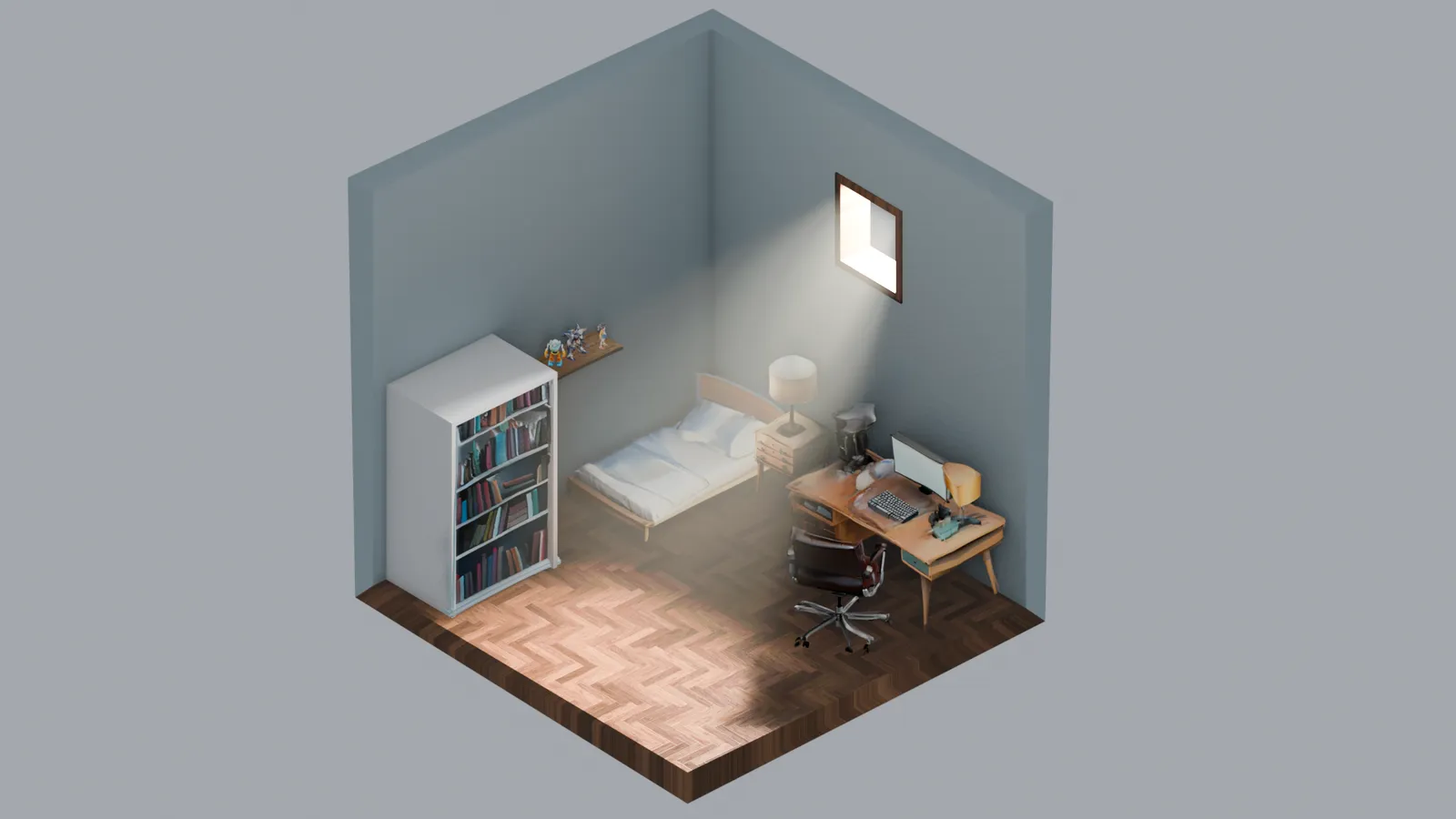
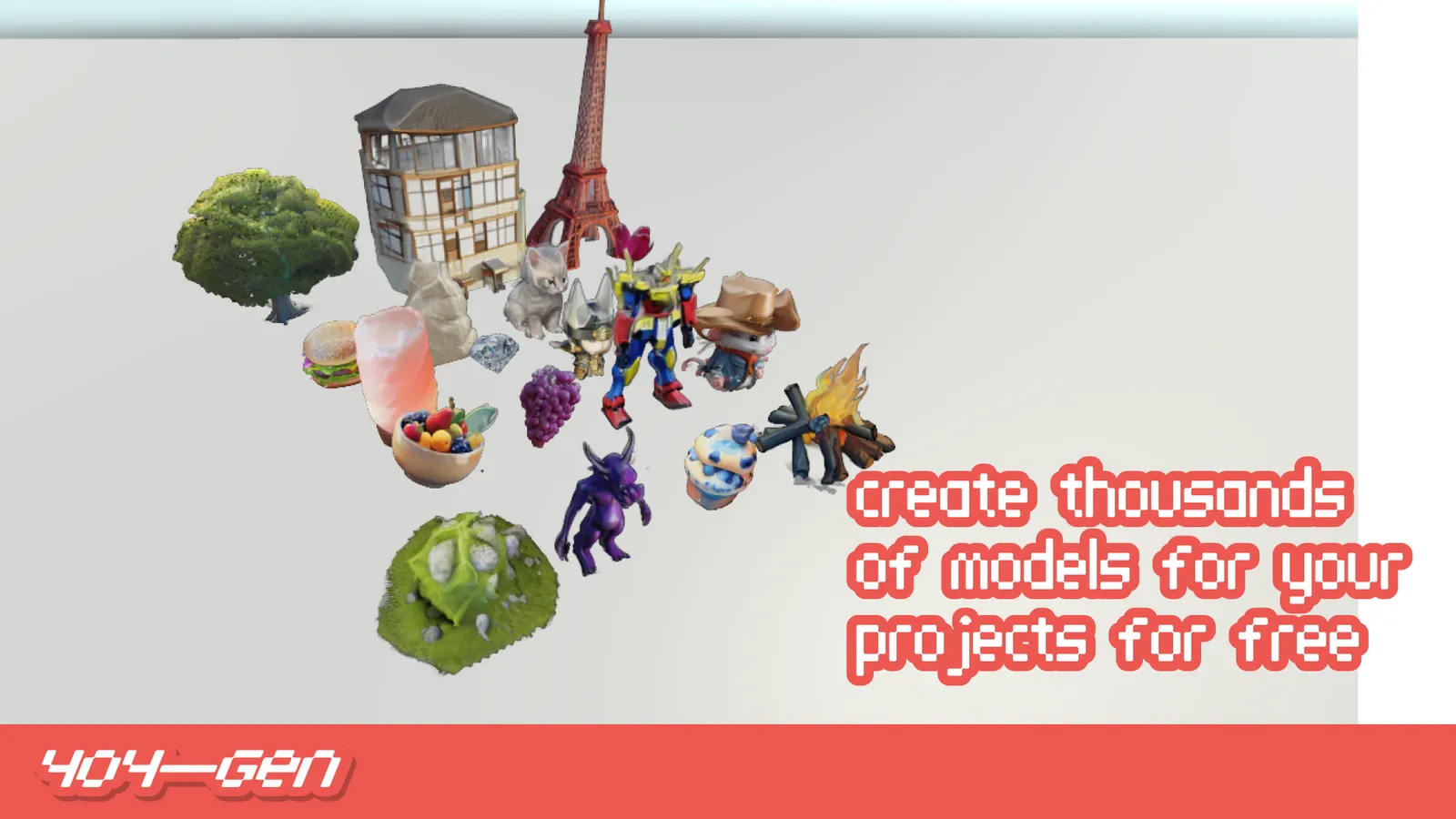
The direction we committed to: use the product to market the product. Every asset in every piece of marketing content was generated with 404-GEN. No stock imagery, no placeholder scenes. The models appeared inside actual Blender setups, game-ready environments, and XR scenes -- proving the use case by living inside it.
This informed everything we launched:
- Gumroad and Blender Market storefronts - designed around in-context scenes that showed the product working inside real creative pipelines
- Unity Store page - framed around game developer workflows, leading with what a developer could build, not what the technology was
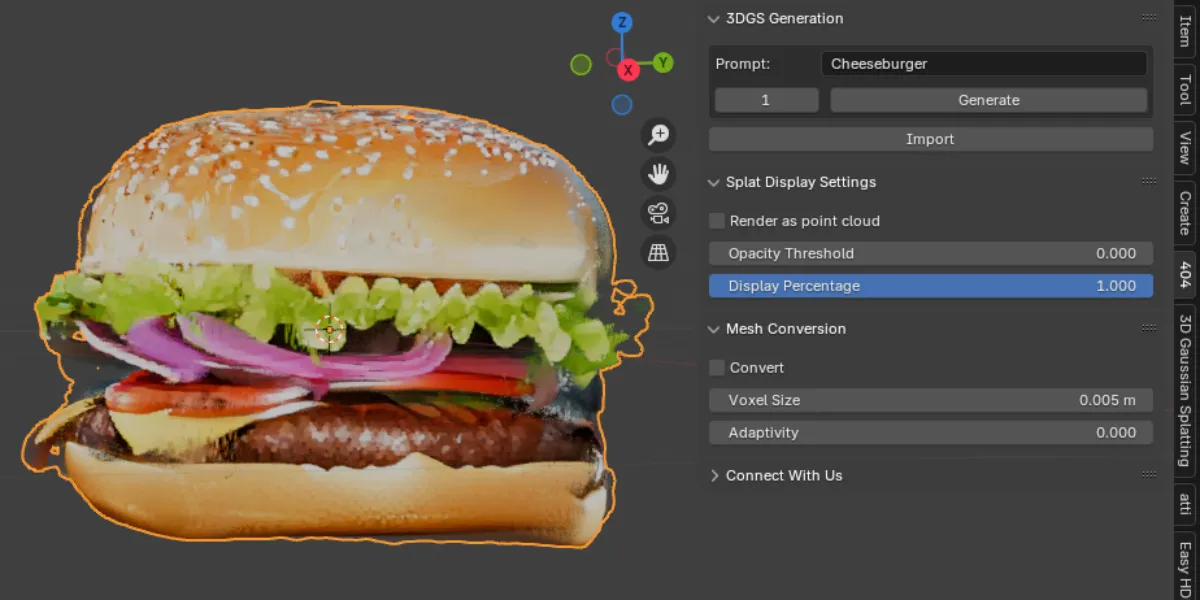
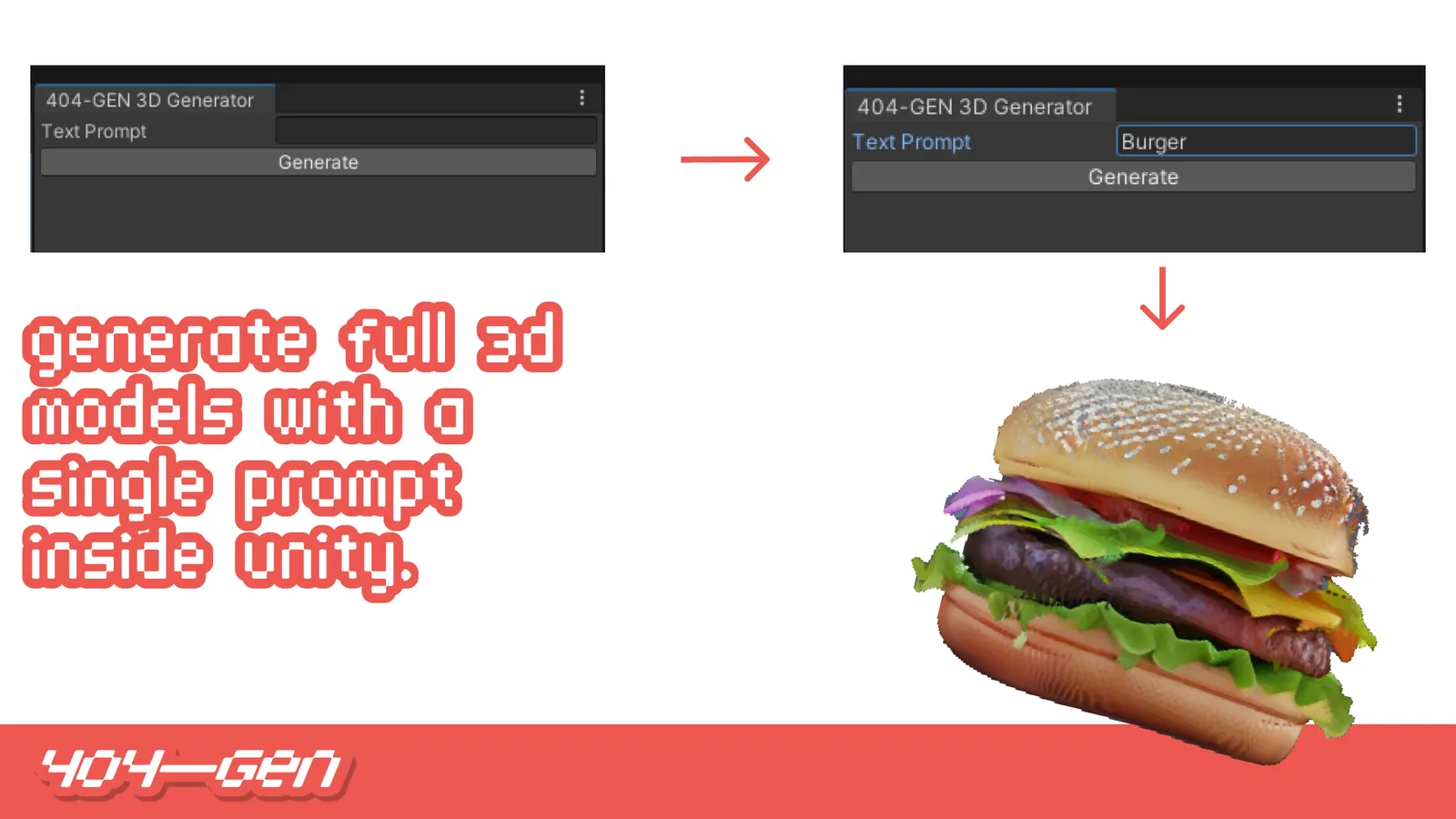
- Discord bot - streamlined the generation flow so artists could go from prompt to model without leaving their community space
- Tutorial and installation videos - built to reduce activation friction, walking users through setup and first use with the same in-context visual language
Public Releases
With conversion stalling on the Blender add-on, the team needed new angles. The question wasn't whether the technology worked, it was whether artists and developers could see themselves using it. My role shifted into active exploration: stress-testing the product across different creative contexts to surface use cases that hadn't been marketed yet.
The approach was hands-on. I worked directly in Blender, pushing the models beyond their obvious applications to find where they had untapped potential:
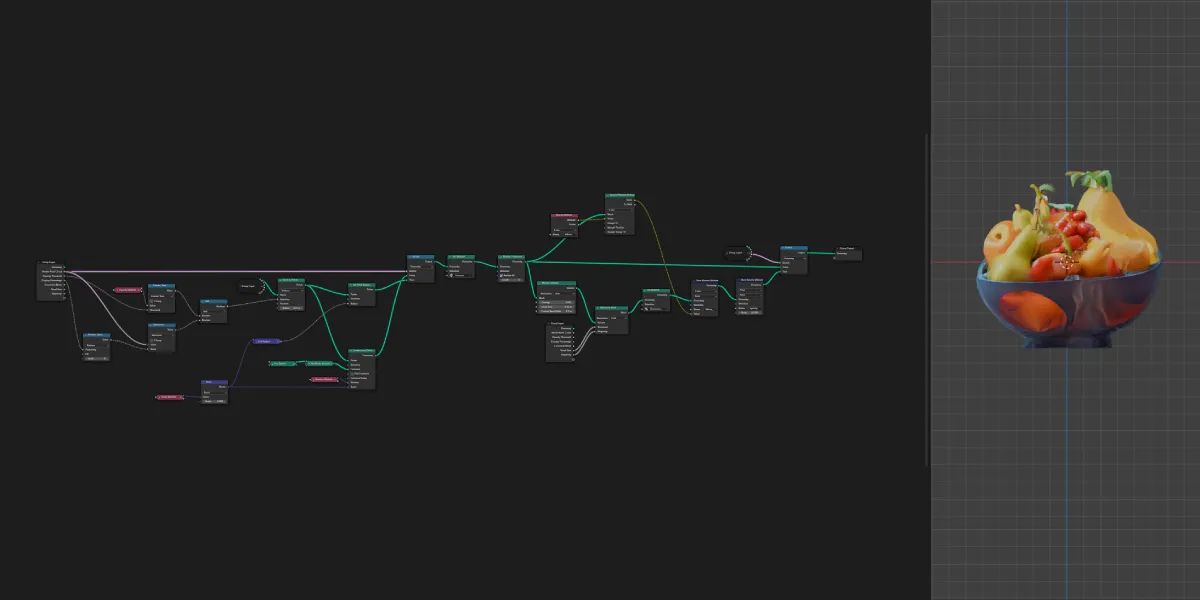
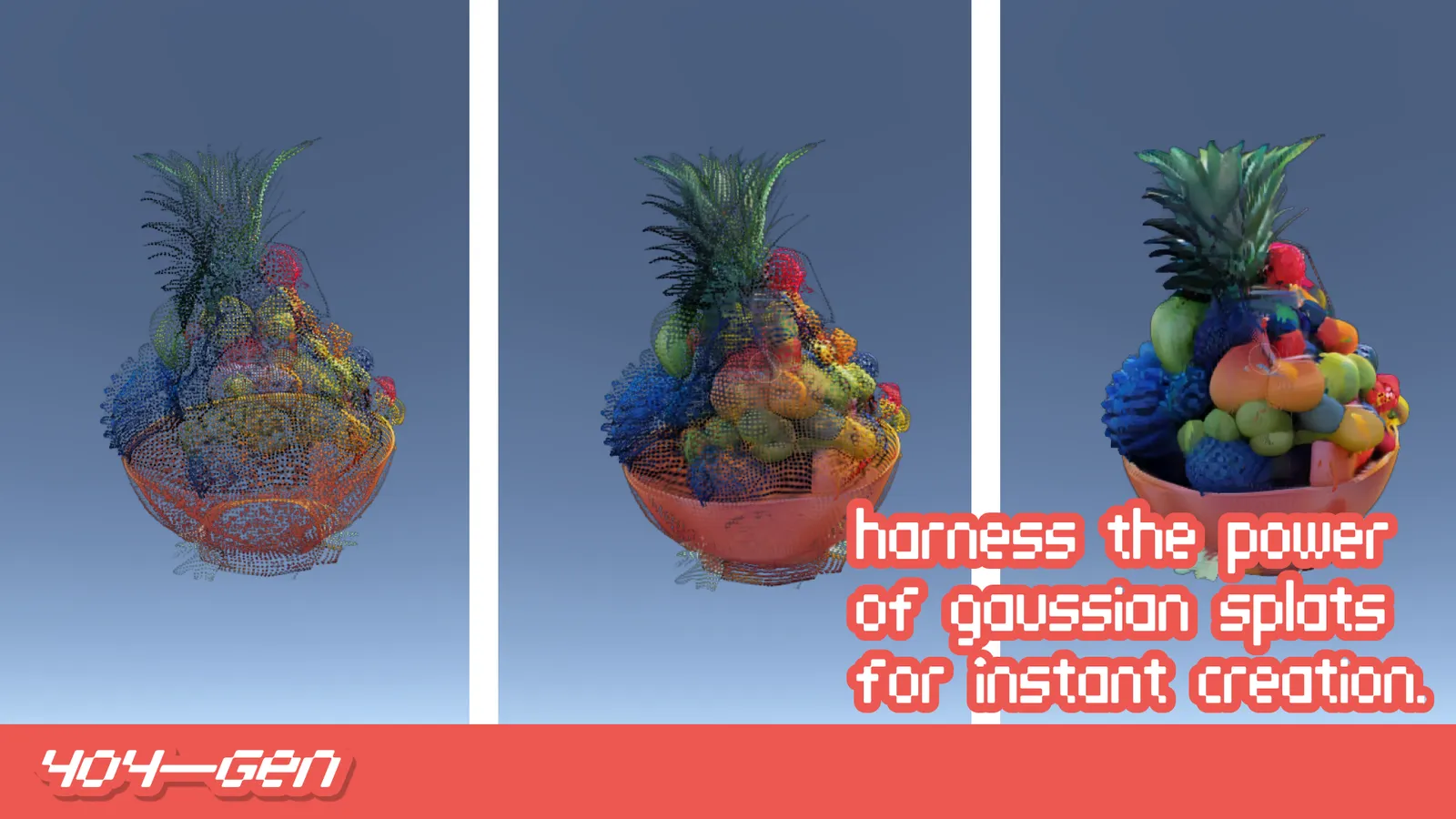
- XR and immersive environments - testing Gaussian splats inside spatial contexts to evaluate feasibility for AR/VR pipelines
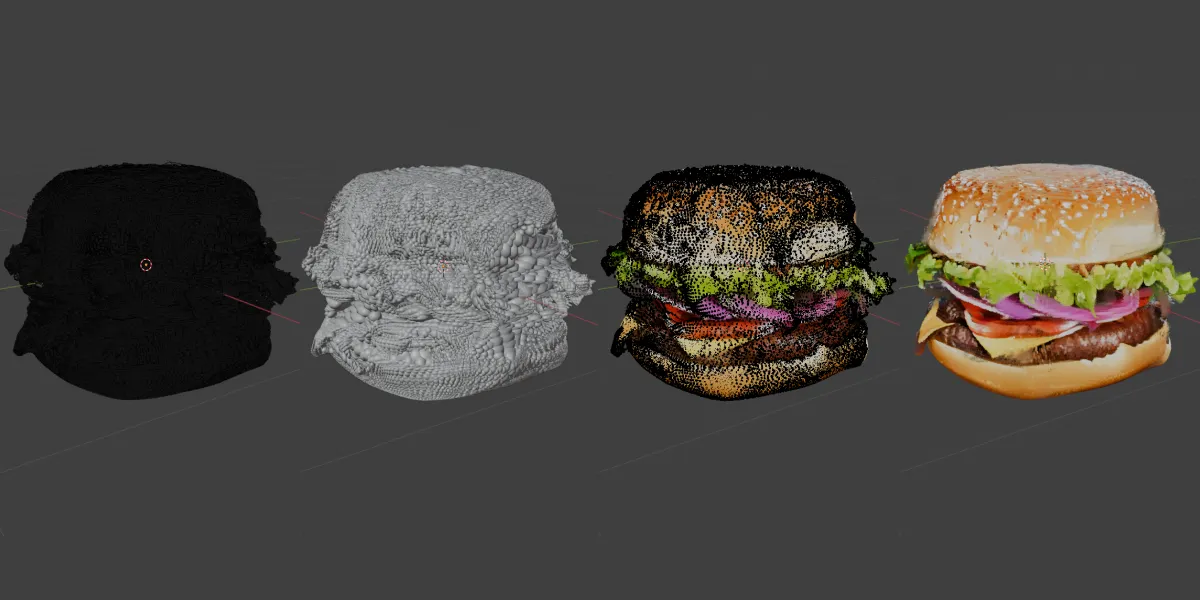
- Geometry node animations - leveraging the point-cloud structure of splat models to create fluid, morphing animations that traditional meshes couldn't replicate
- Scene composition - building full environments using only 404-GEN assets to identify which model types held up under real production conditions
The goal was to find proof points that would resonate with a developer or artist who hadn't been convinced yet. Findings fed directly back into the marketing direction -- new content angles, new audiences to speak to, and a clearer picture of where the product had room to grow.
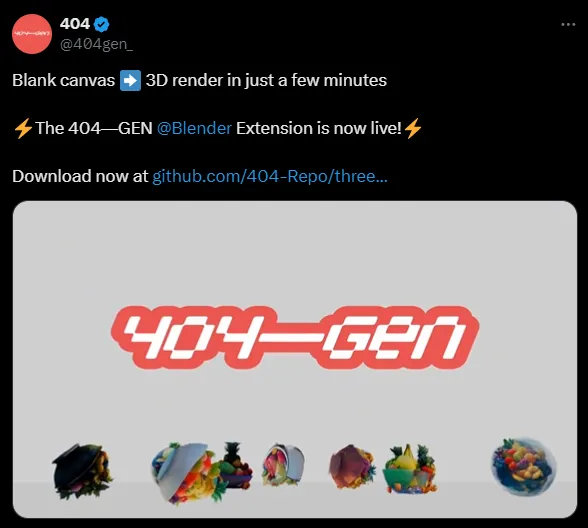
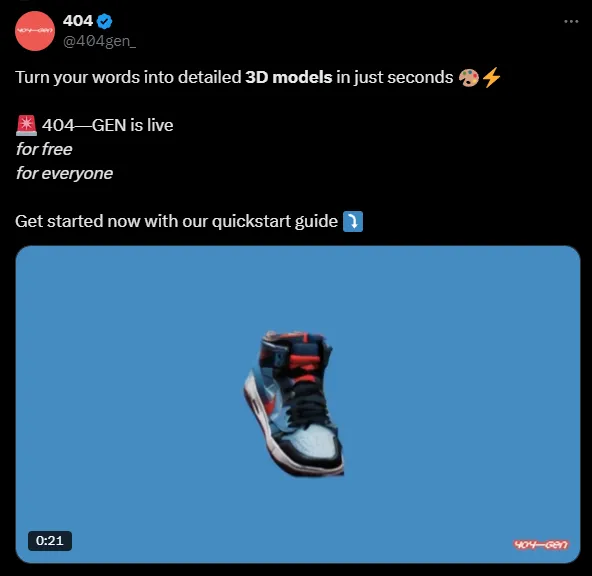
Marketing for Public Releases
The work shipped and it stuck. Across six months of contract work, the impact was measurable in both volume and adoption.
- Produced approximately 40 videos across marketing, tutorials, and use case demonstrations, with 10-15 used directly in official marketing campaigns
- Launched storefronts across Gumroad, Blender Market, and Unity Store, giving the product its first structured public presence across three distribution channels
- 404-GEN became a Unity Verified Solution during this engagement, a designation requiring extensive technical due diligence and signaling industry-grade credibility to game developers
- Gaussian splat to UV mesh workflow, developed during use case exploration, was adopted by the internal team and folded into the product pipeline
- Optimization workflows surfaced through hands-on testing were picked up by the team, contributing to a faster, more reliable generation process
The through line across all of it was the same principle that guided the launch design: the best way to prove what the product could do was to actually use it.
Takeaways and Next Steps
My work at 404-GEN combined technical exploration with strategic marketing to drive the discovery, usability, and adoption of cutting-edge Gaussian Splat models. By creating tutorials, testing product features, and launching storefronts, I contributed to expanding 404-GEN’s reach and showcasing the versatility of their tools to the creative community. This experience taught me the value of bridging emerging technology with user-centered design, pushing boundaries to make complex innovations accessible and inspiring for artists and developers alike.
Few of the key lessons learned:
- Push limits and explore creativity.
- New technologies require even more powerful tech to run it. My computer crashed multiple times while working with these projects.
- Spread the word as fast as possible to increase adoption and let users innovate on the technology.
Thank you to the 404-GEN Team
Ben James
Monica Vasandani
Ruben Hohndorf Maxim Bladyko
Alexander Tereshin
Rodion Stetsurin
“Sheesh”
Robin Simons