Spectrogram Hero Design
The problem
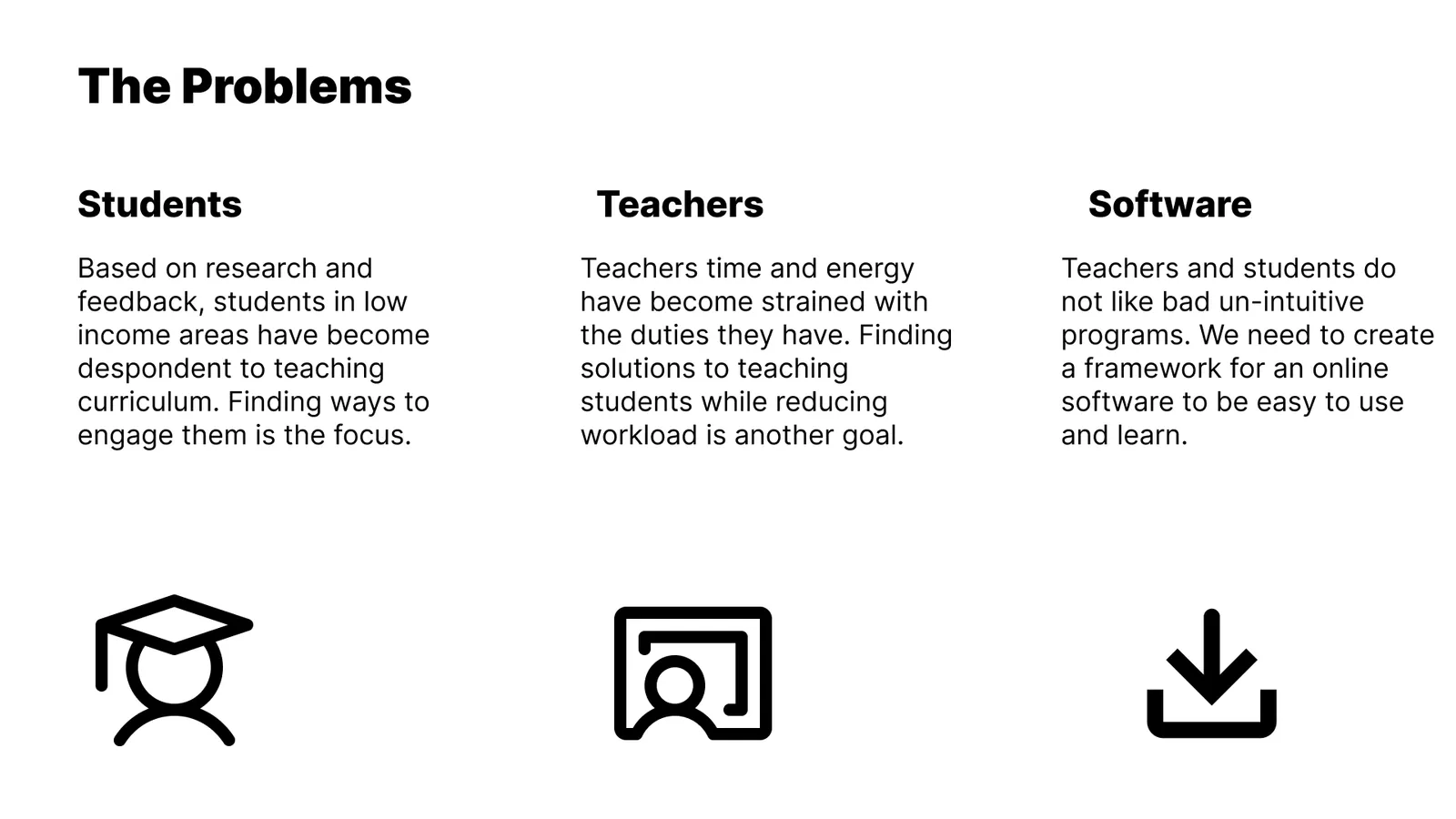
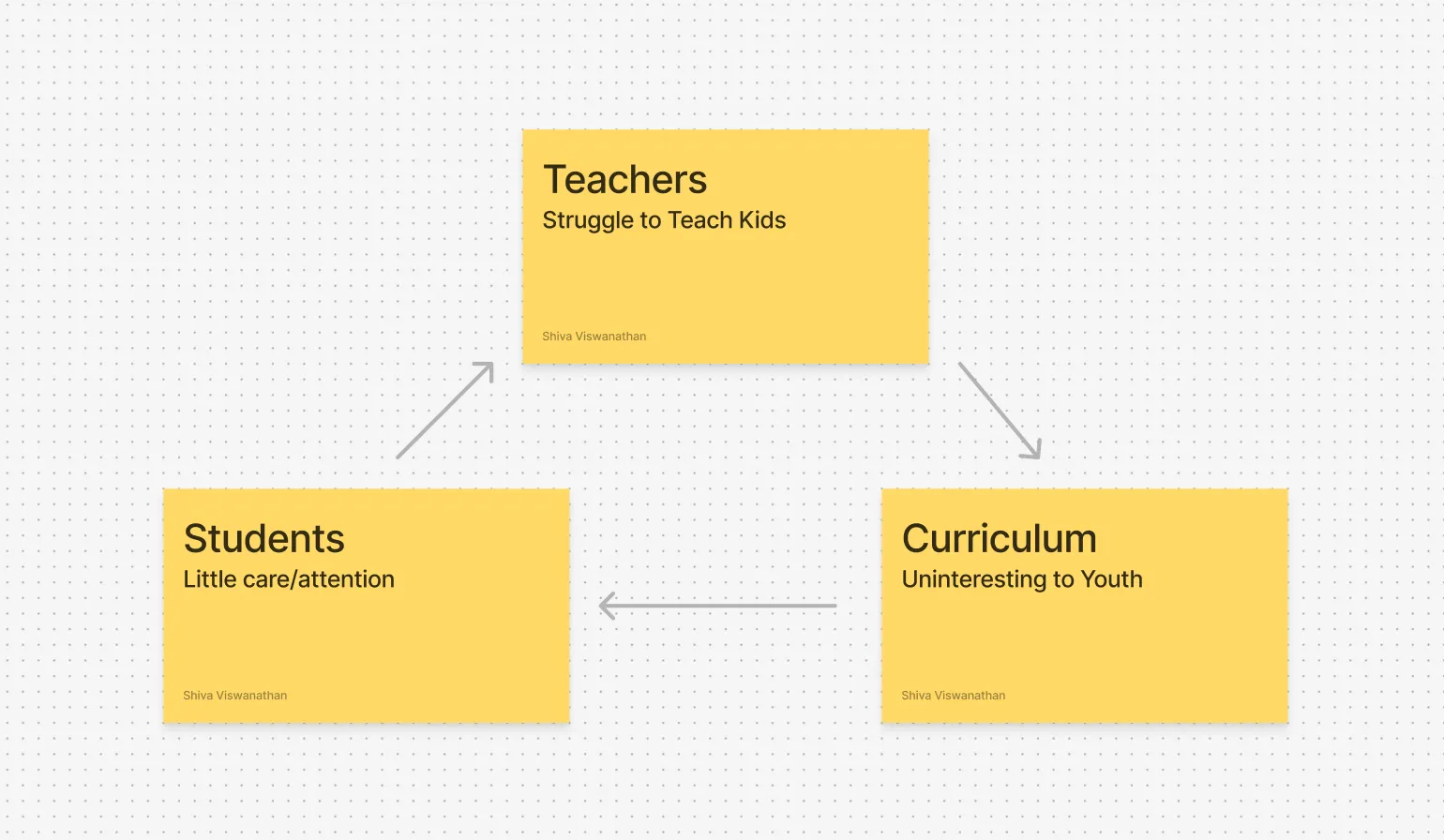
Students in lower-income communities are falling behind in subjects like science. How can the Spectrogram tool get them interested in learning about sound?
Who it's for
There are two groups: teachers and students. Teachers run the curriculum, so they need a reason to teach it and to help students get the most out of it. The design has to balance ease of use for teachers with engagement for students.
Tools and approach
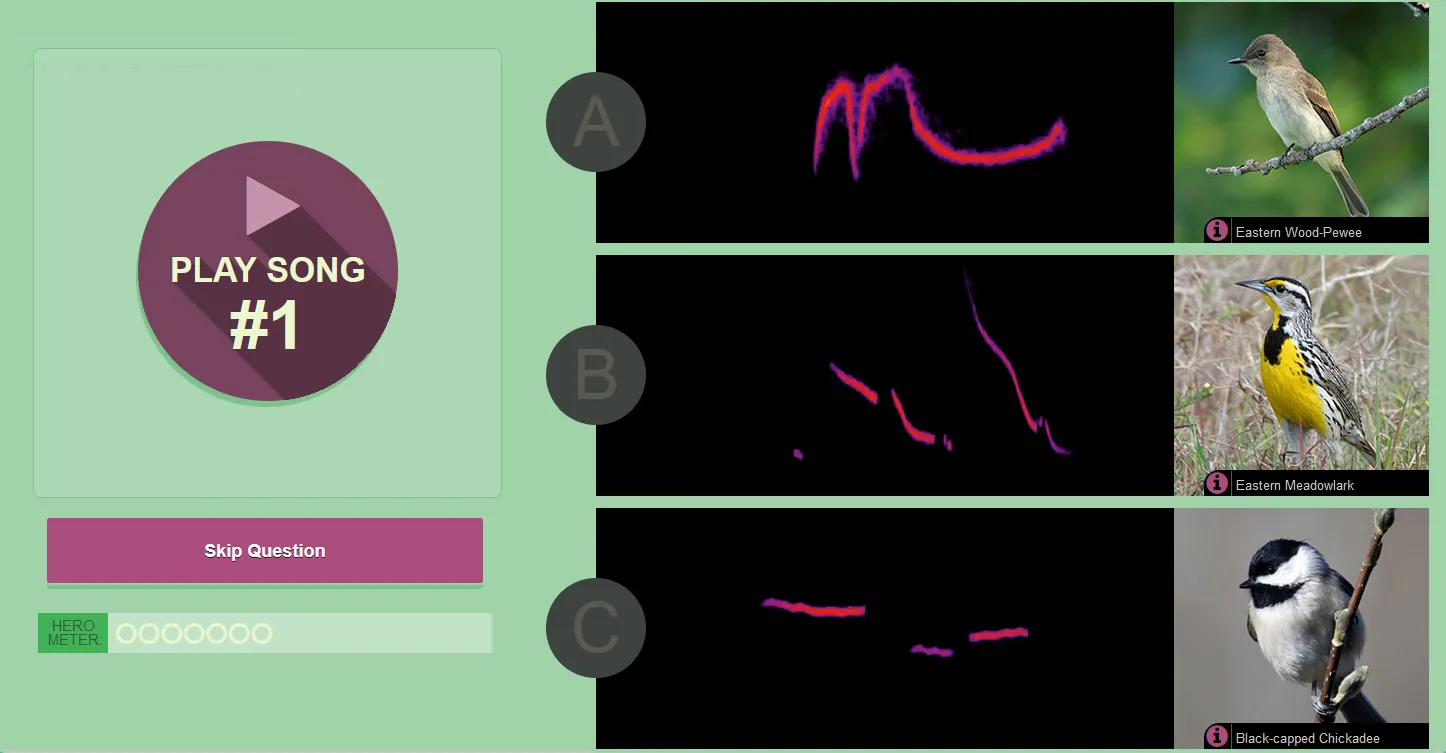
I worked with researcher Victor Minces and PhD resident Akshay Nagarajan to use Spectrogram to teach the science of music and sound. We based our design on an earlier game, Bird Song Hero, from the Cornell Lab of Ornithology.
Note: many of the designs are built on Spectrogram's previous UI, to better show how the final product would look if the UCSD team coded it.
Adapting our approach
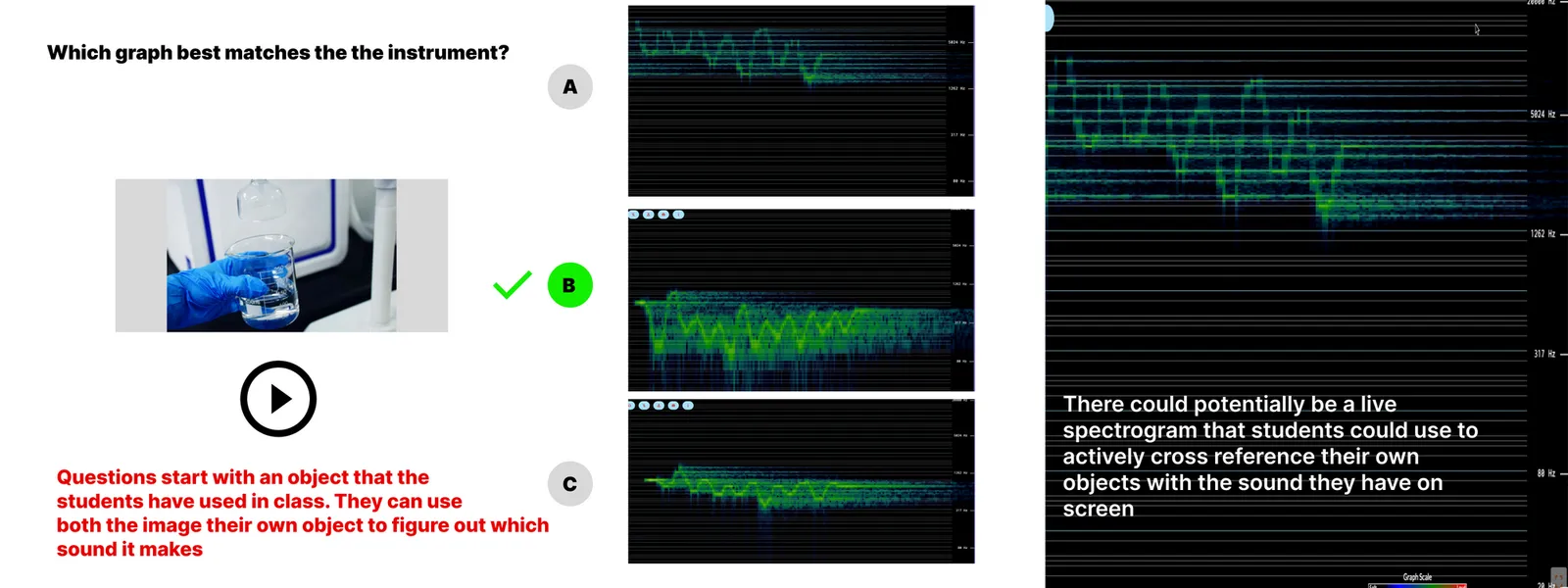
Alongside a Bird Song Hero style game, we tried having students play with Spectrogram live in class. Teacher feedback told us the game needed to be three things: easy to set up, easy to maintain, and engaging for students and teachers.
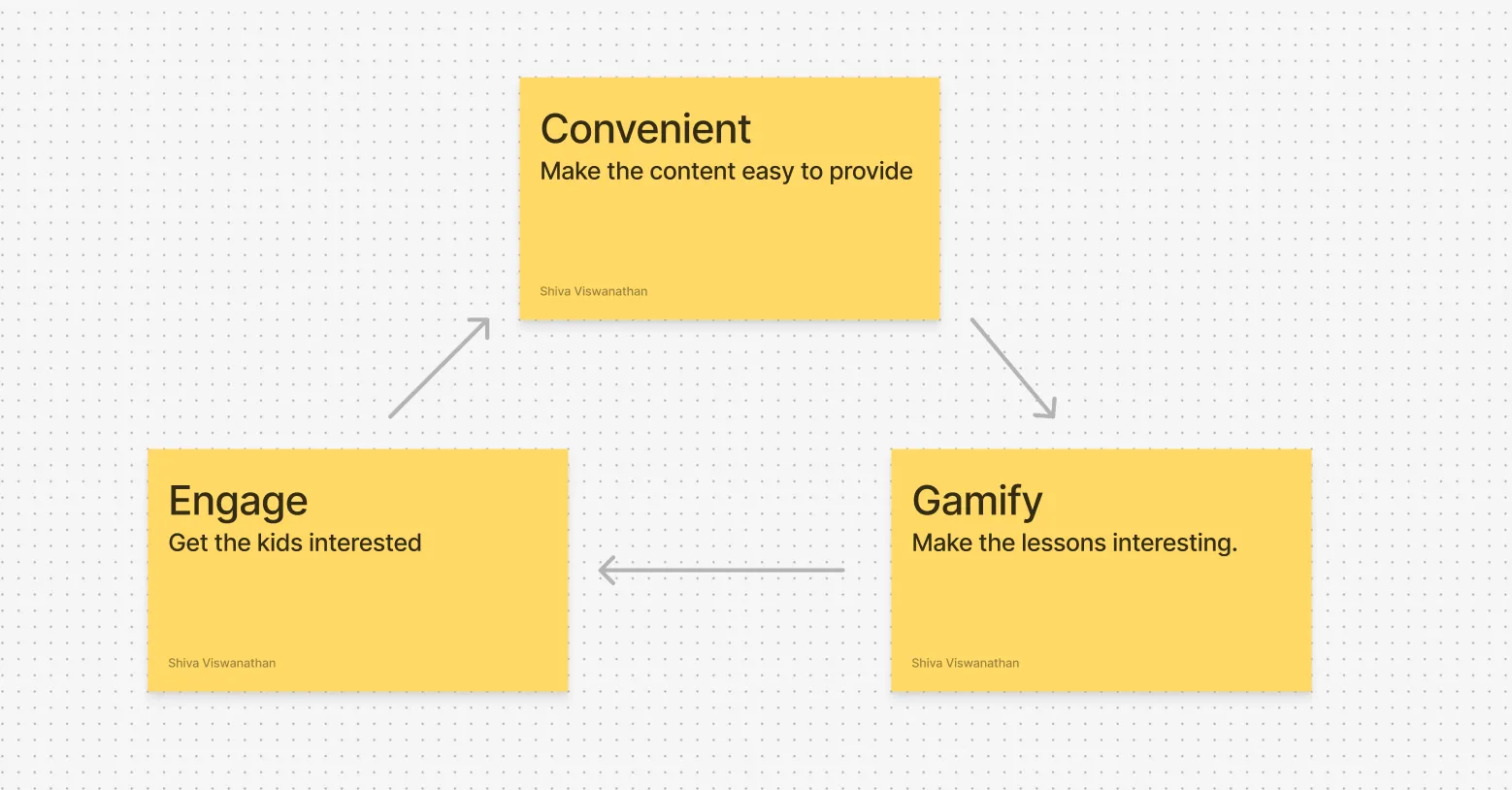
Early prototypes
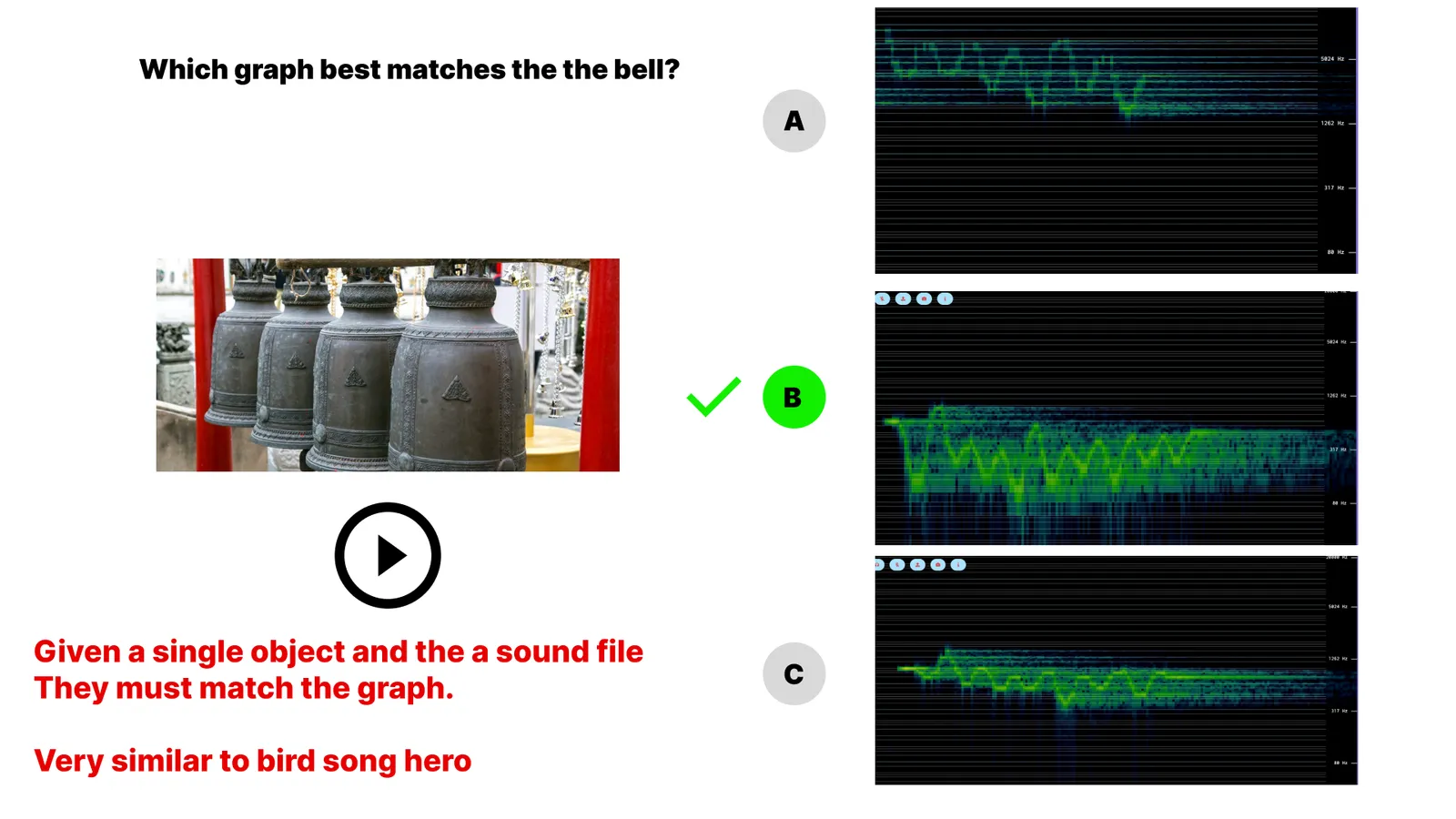
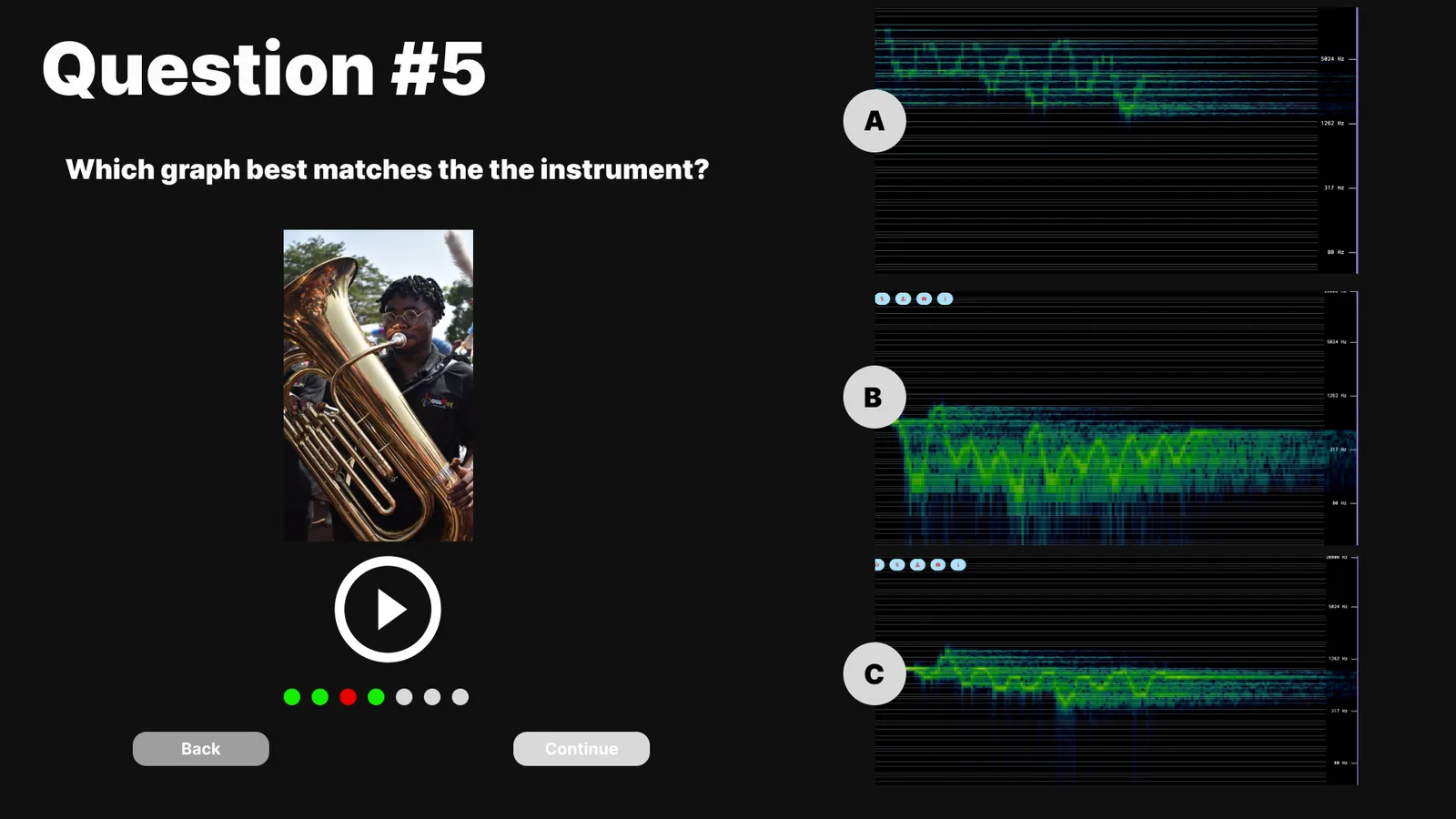
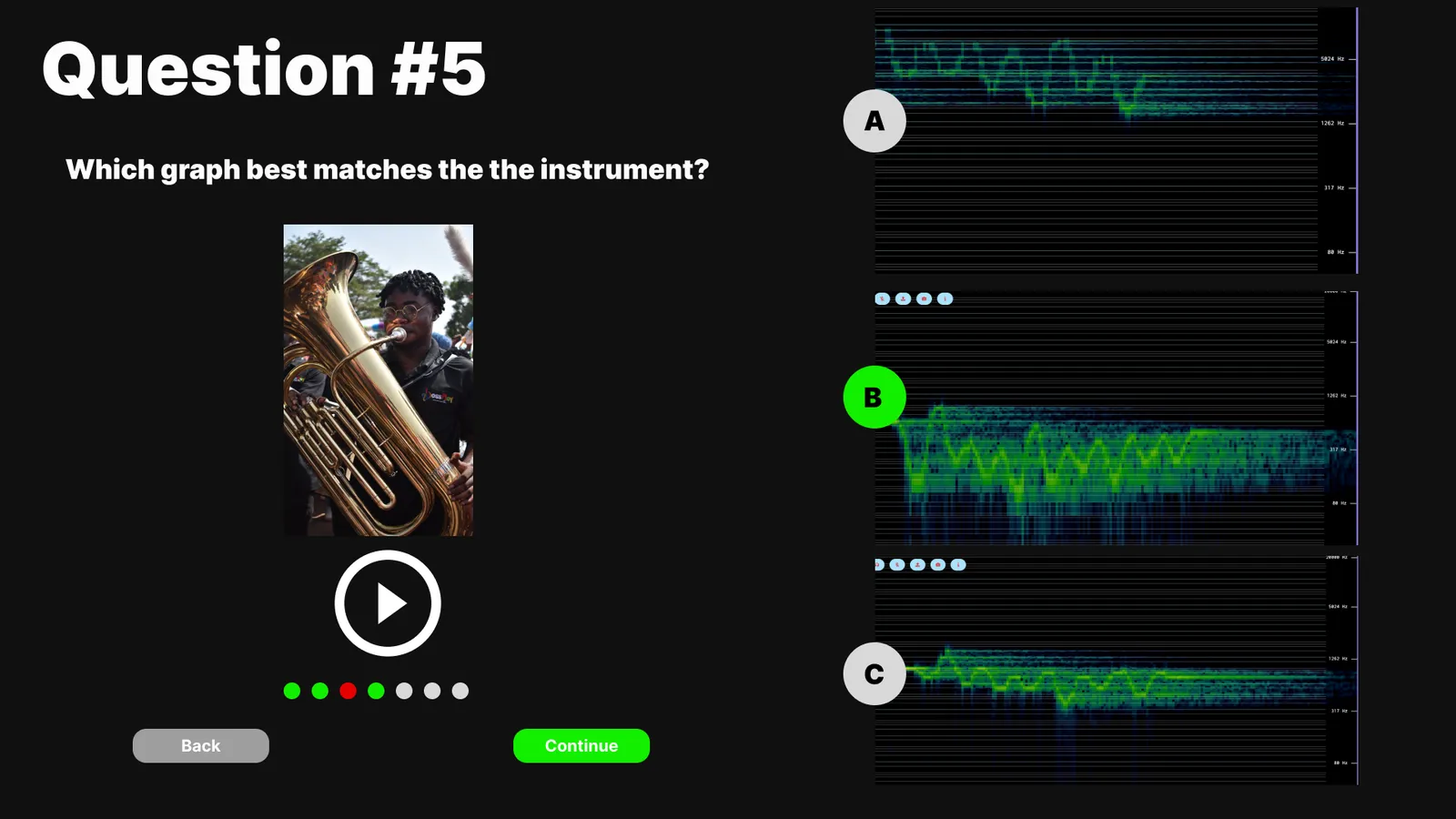
We started by sketching basic game mechanics as a quiz. In the first plan, teachers let students try Spectrogram hands-on before the quiz. We kept the quiz easy to answer and light on teacher help. The research showed students needed to feel independent using Spectrogram.
Design challenges
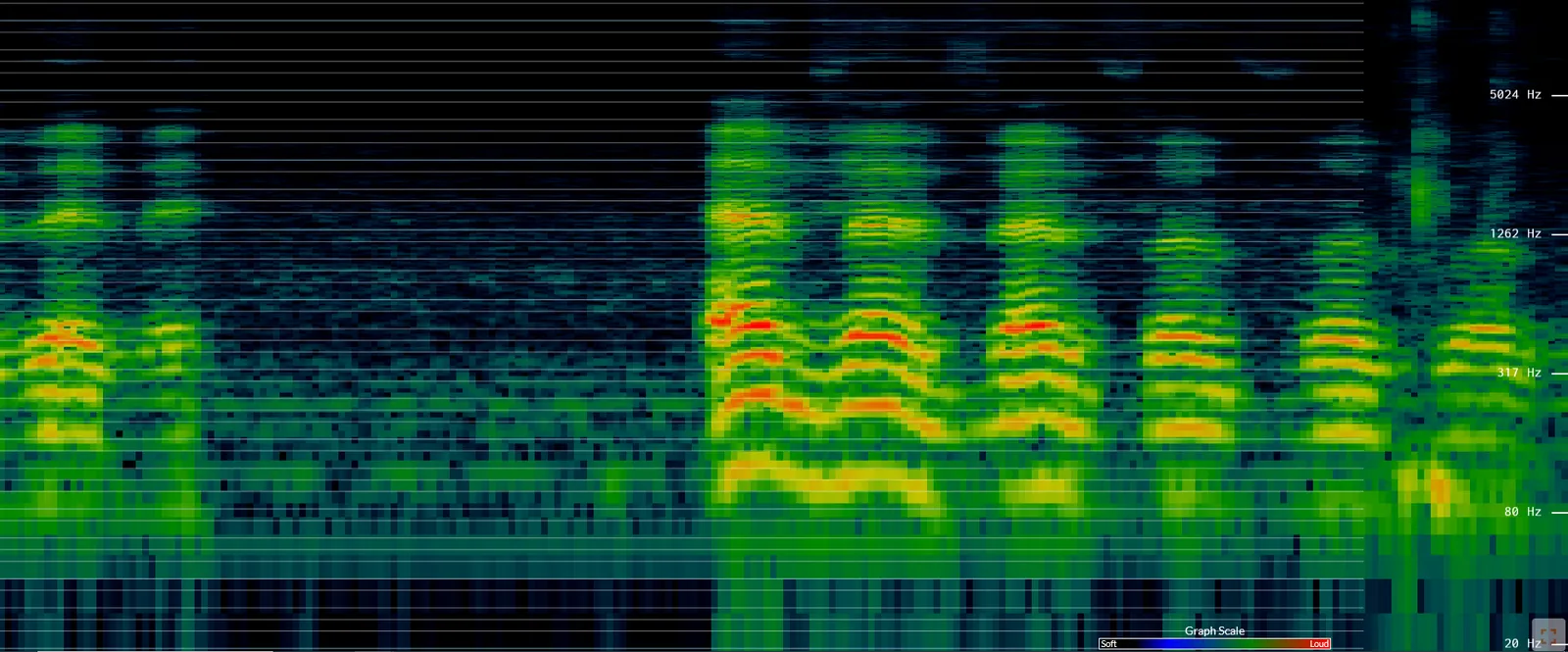
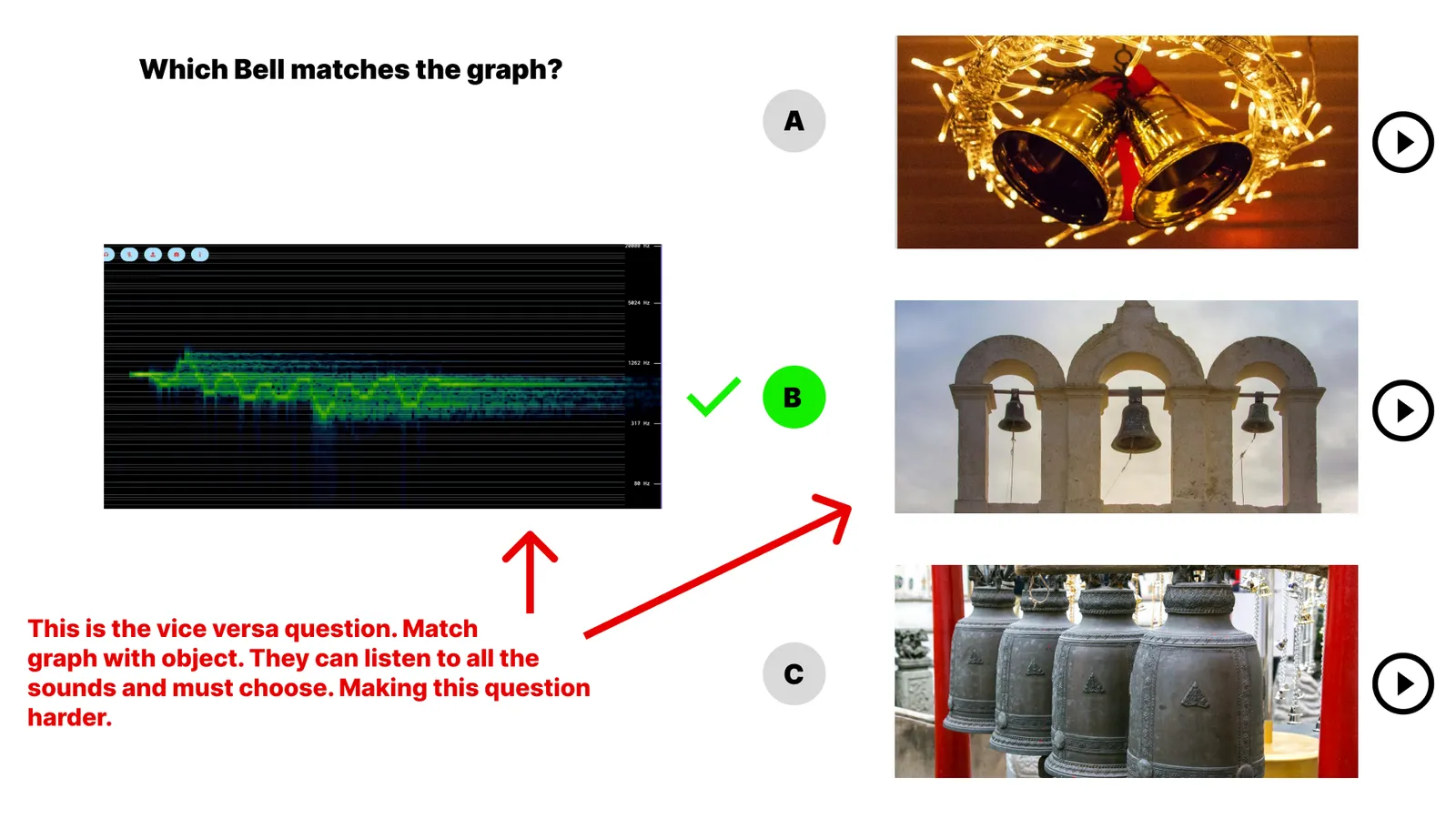
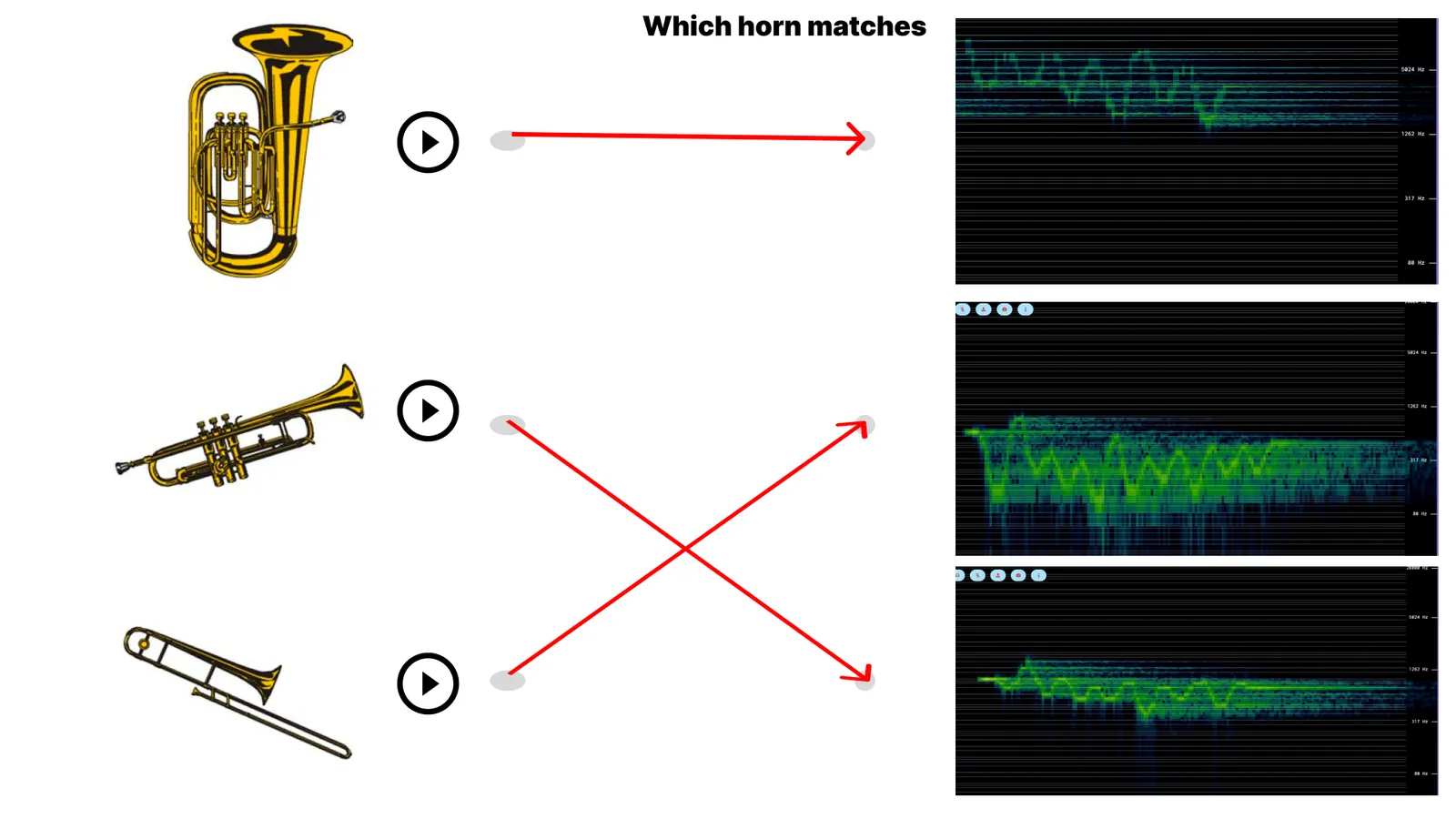
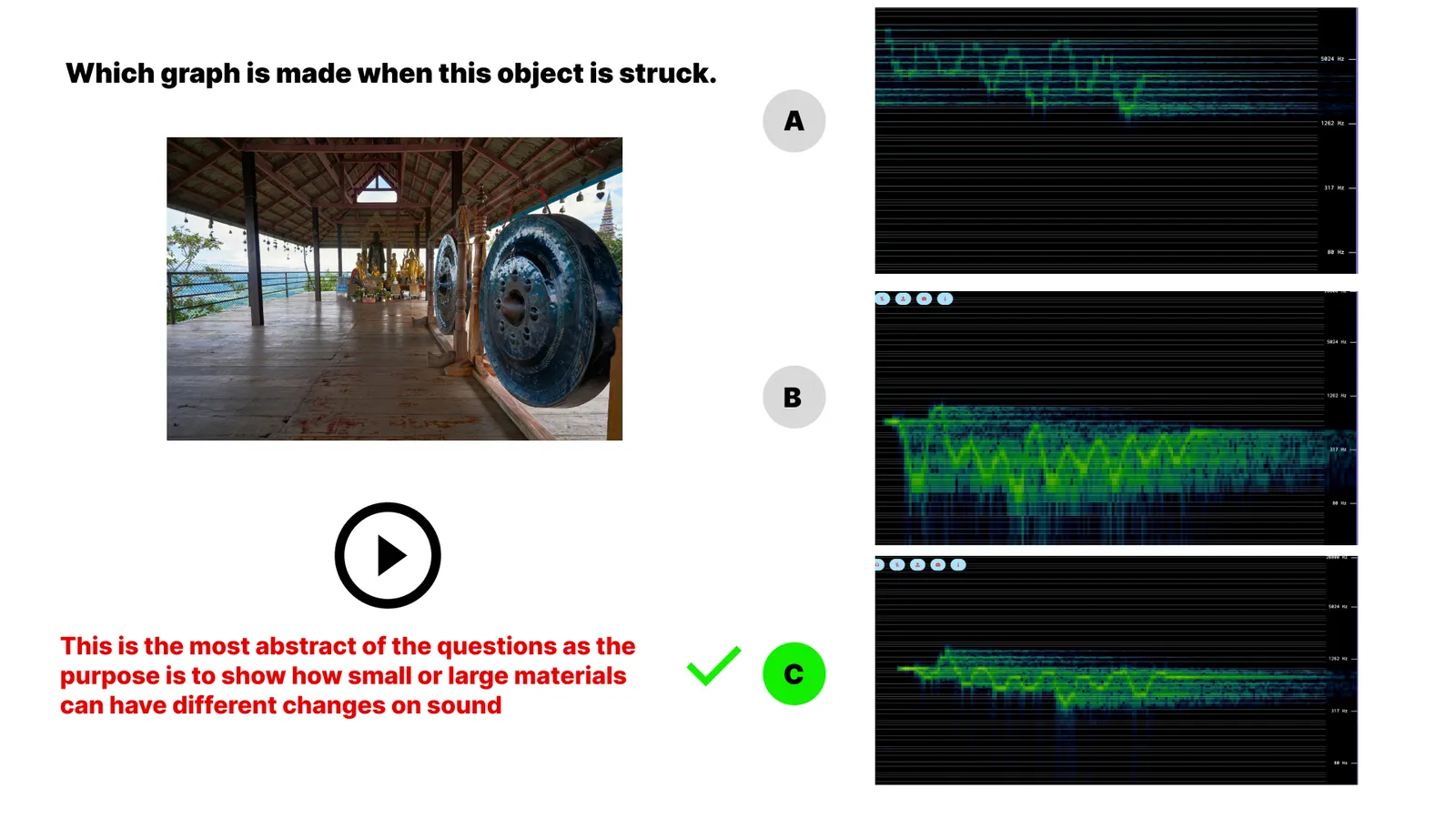
From our early research into sound design, we set a few limits. Sounds should be grounded in reality, using instruments and MIDI that could carry over to other skills. Many people also struggle with a constant pitch, so we needed references that move or shift in pitch for students to latch onto. That's why most of the graphs aren't straight lines.
Increasing difficulty
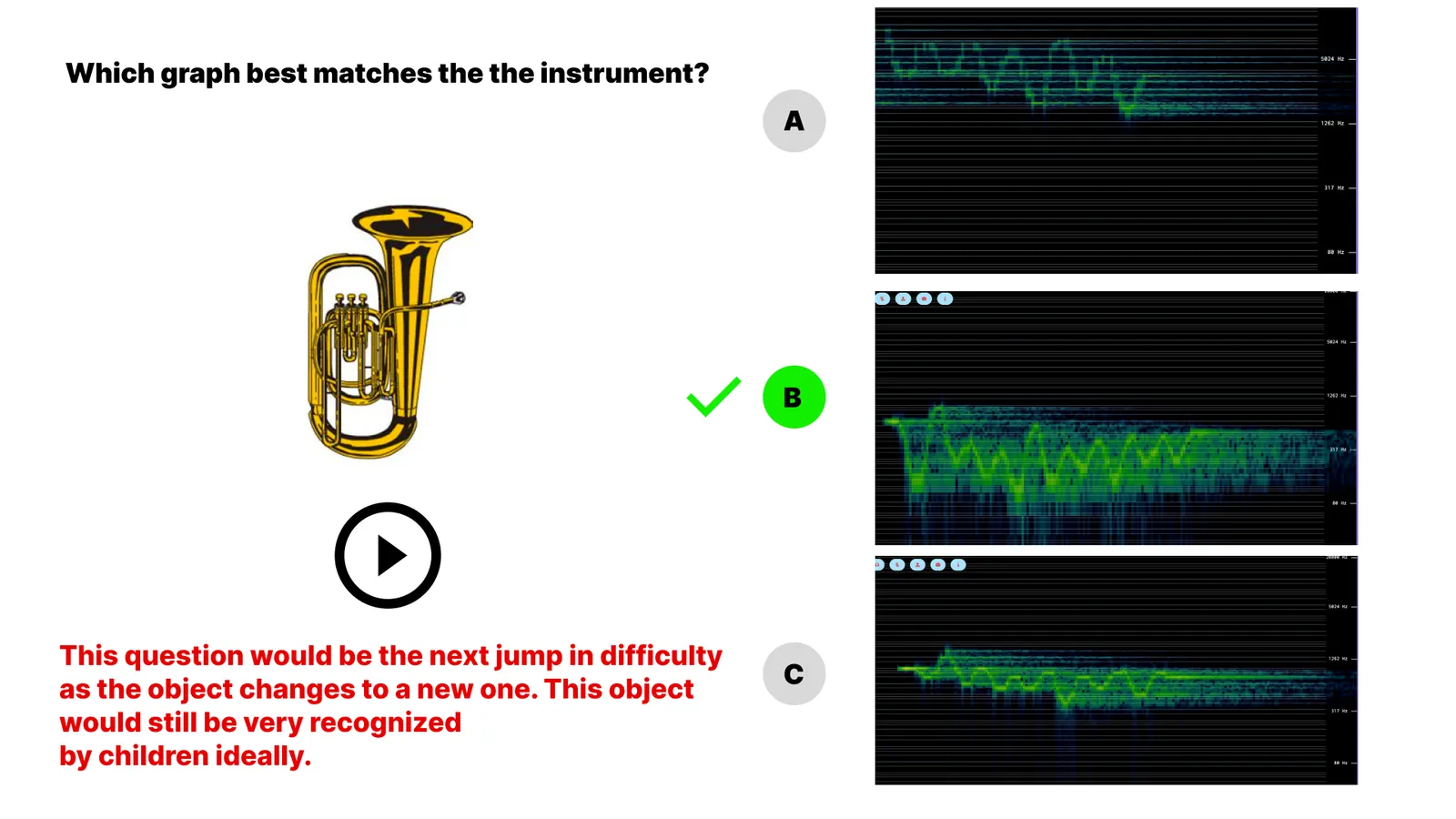
Some game design choices were off limits, like asking students to name a specific pitch. But we did want the sounds to get harder, so students had to read Spectrogram more closely for the answers. We changed the sound sources and added a live spectrogram so students could see how their voices changed the live spectrogram, then use what they saw to answer.
Working with constraints
The goal is to teach sound using Spectrogram. It's an easy tool for teachers, with feedback that keeps students engaged. We don't want teaching it to be chaotic for teachers, but we do want students using it in and out of class.
Current stage
We're still working on the prototype before adding it to the site. It needs more research and user testing before development. We hope to make it a free resource for every school.
Takeaways and next steps
Victor Minces, Akshay Nagarajan and the UCSD Cognitive Science Department are still working on bringing Spectrogram into the curriculum. I spent four months on the project, prototyping and working out the scope. Balancing stakeholders with conflicting interests changed the outcome, but Spectrogram Hero is becoming a useful tool for teaching sound.
What I learned:
- Research and design decisions can conflict.
- Stakeholders with different goals can be balanced into one product.
Next Steps:
- Build the game inside the Spectrogram app.
- Connect more of Spectrogram's features to the game.
- Refine the prototypes.