Keyblocks: The Modular Keyboard
Thesis presentation and research paper
The problem
The keyboard is one of the most used tools we have. About 60% of the world uses the internet, mostly through a keyboard. Yet manufacturers have stopped evolving it, and the design has gone stale.
Possible directions
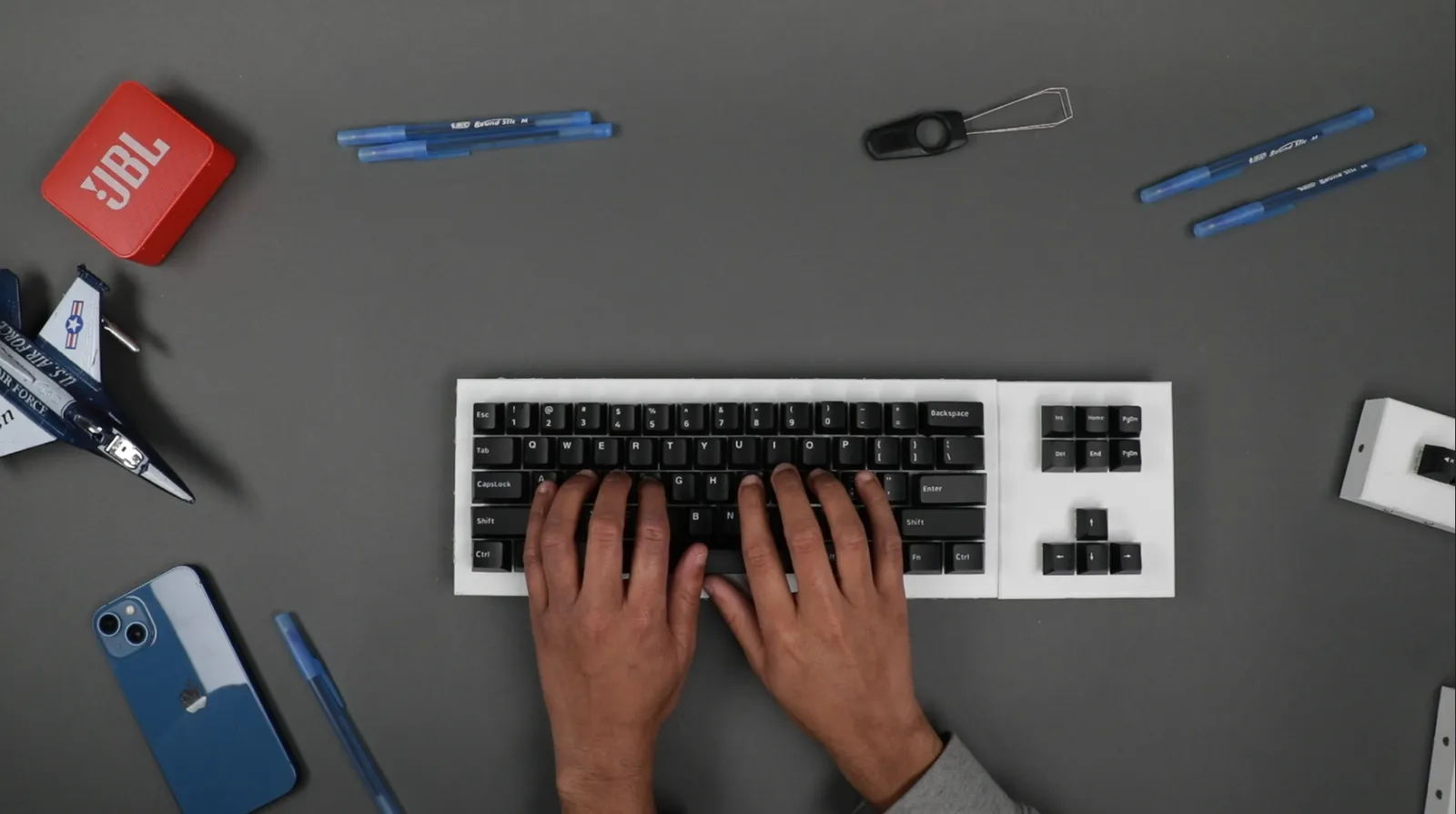
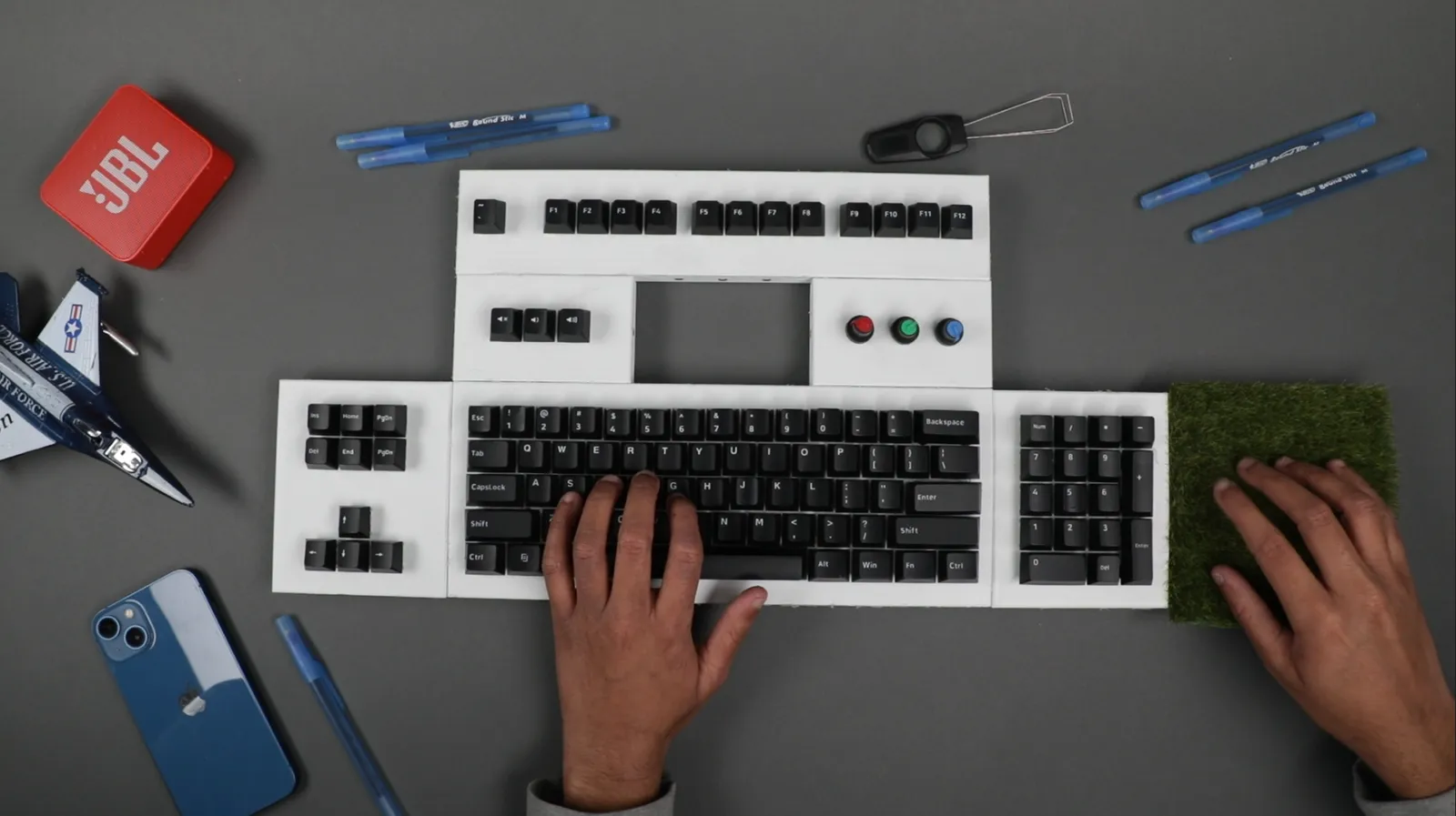
Products like the phone kept changing as people used them differently. I wanted more human ways for people to change their keyboard layouts and setups, which meant taking on a design that is 160 years old.
First prototypes
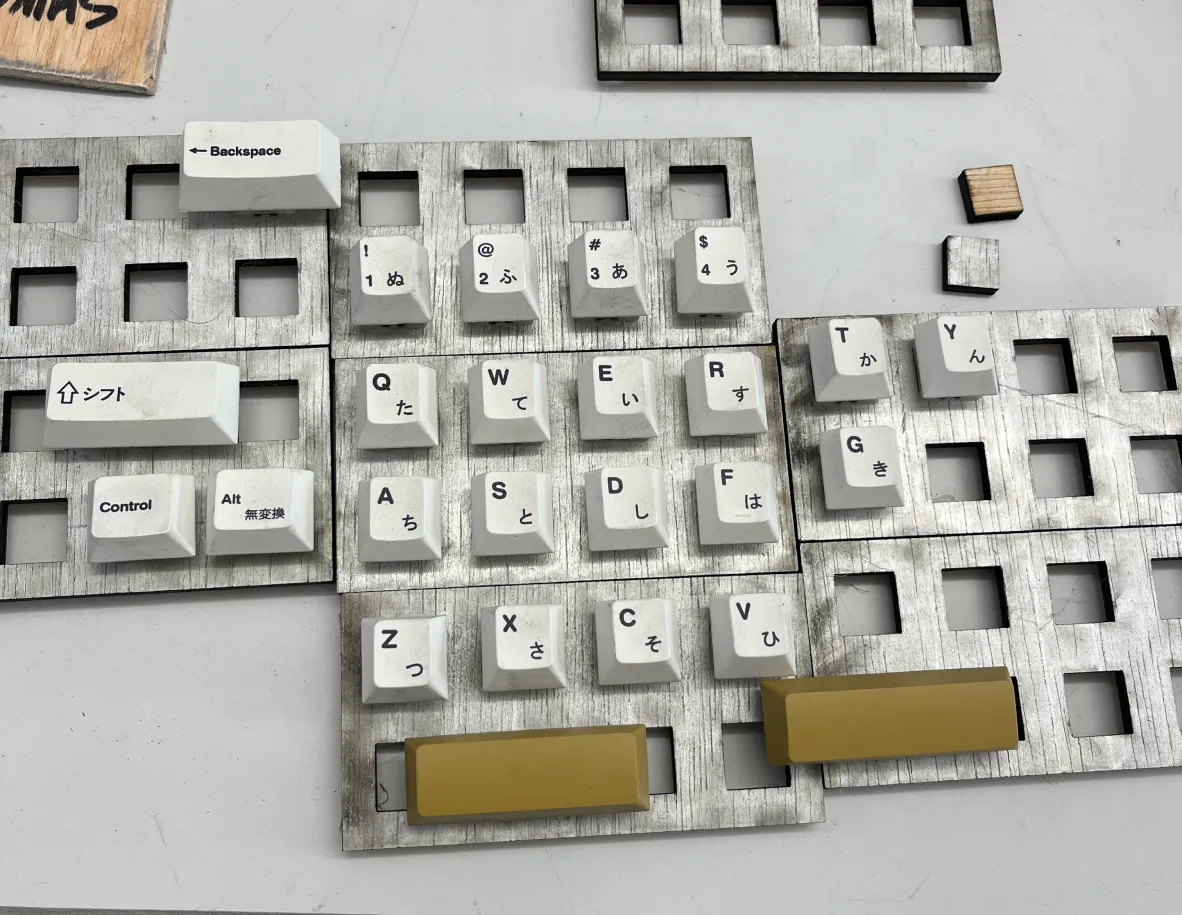
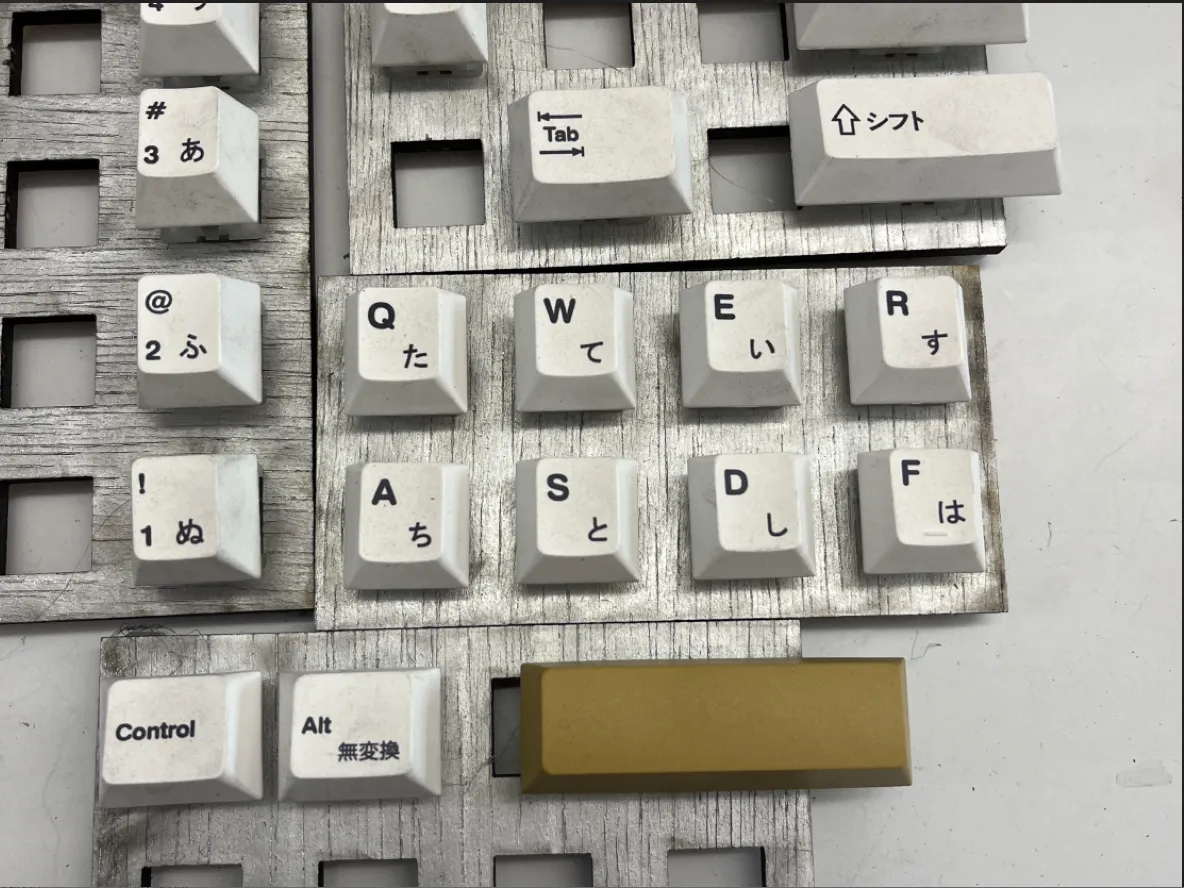
To see how people would use a modular keyboard, I built early prototypes from wood panels and spare keyboard parts. People rearranged the keys and blocks. Testers liked moving the modules, but the prototypes weren't practical as working keyboards.
Design and digital fabrication
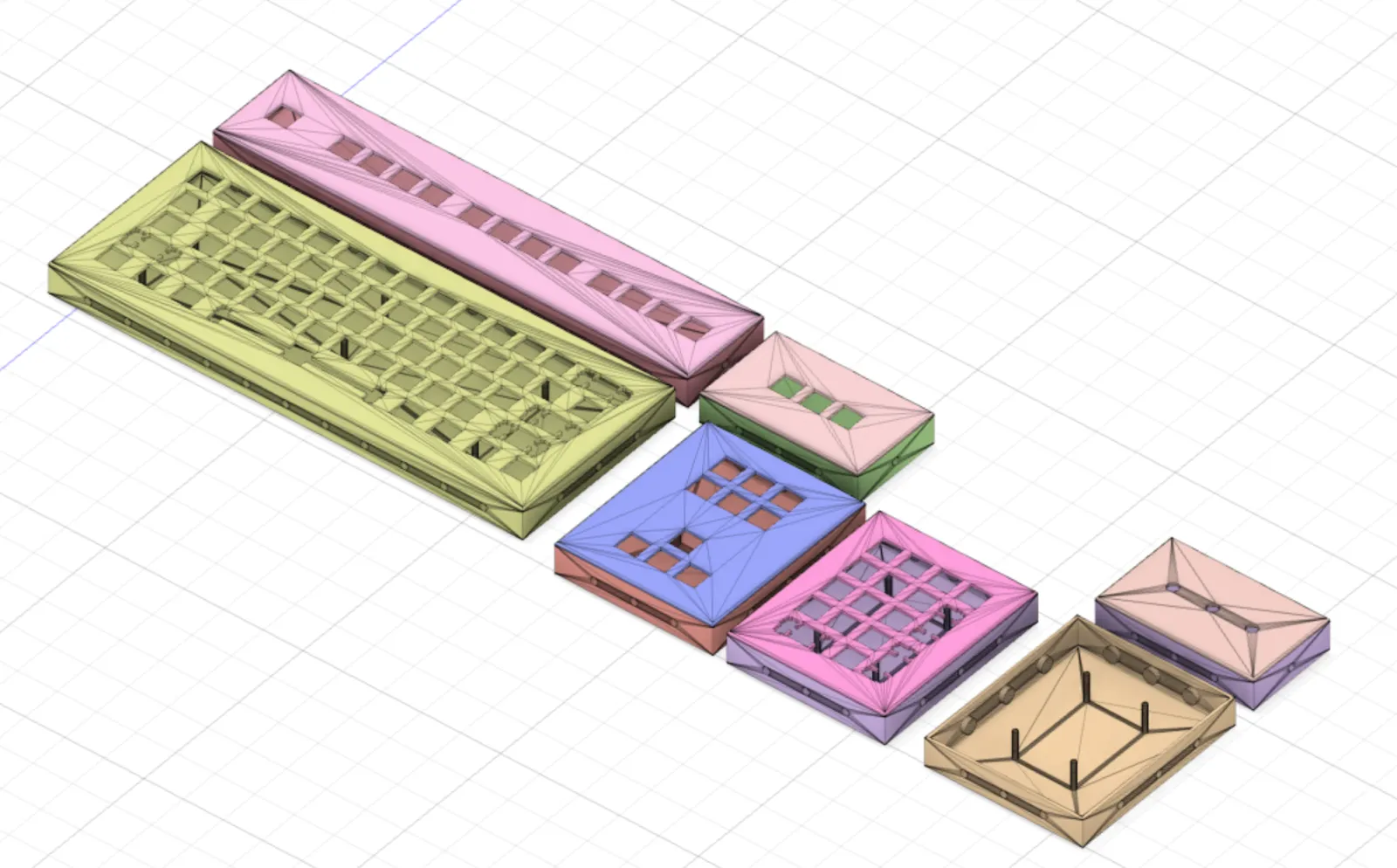
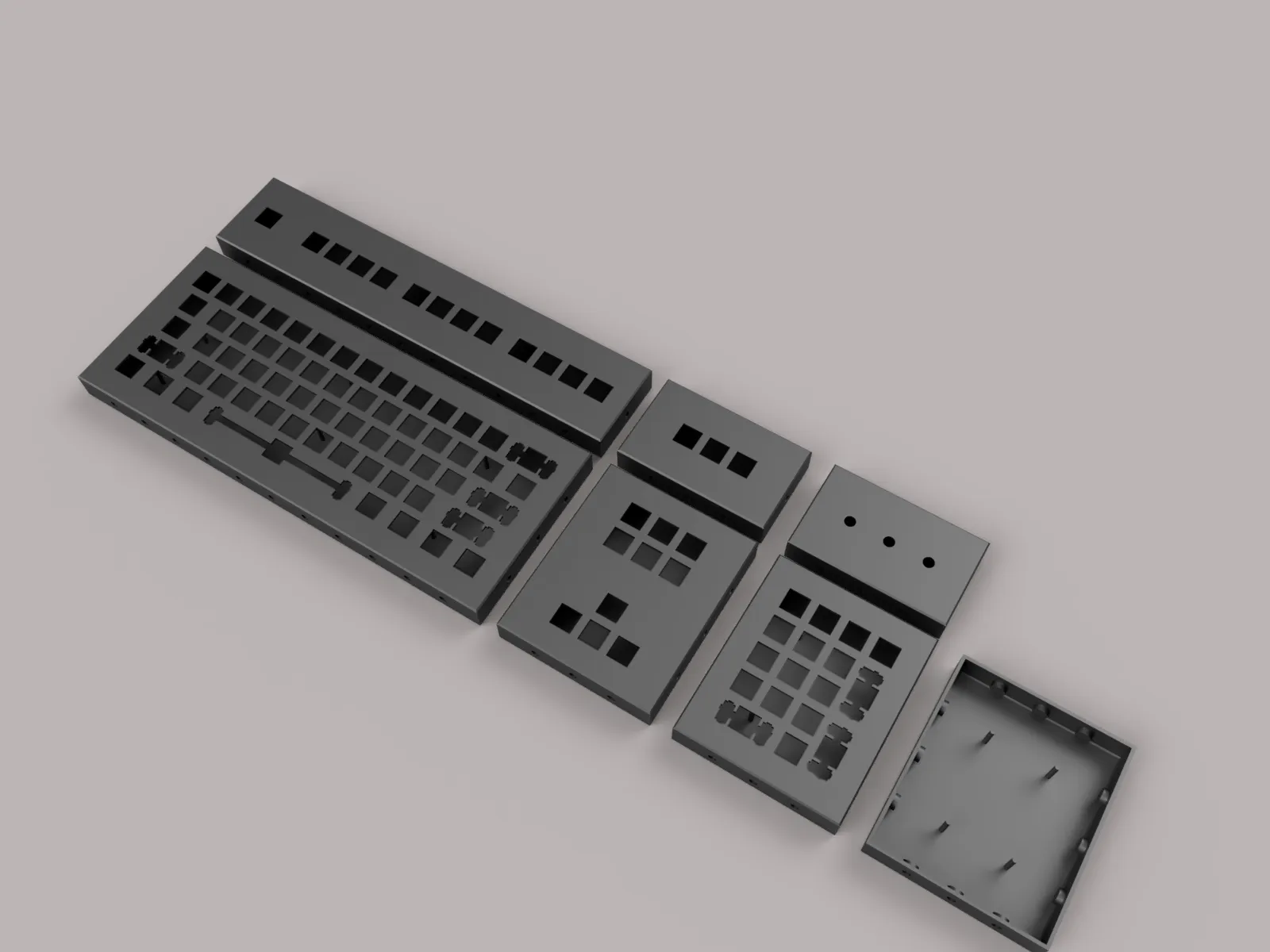
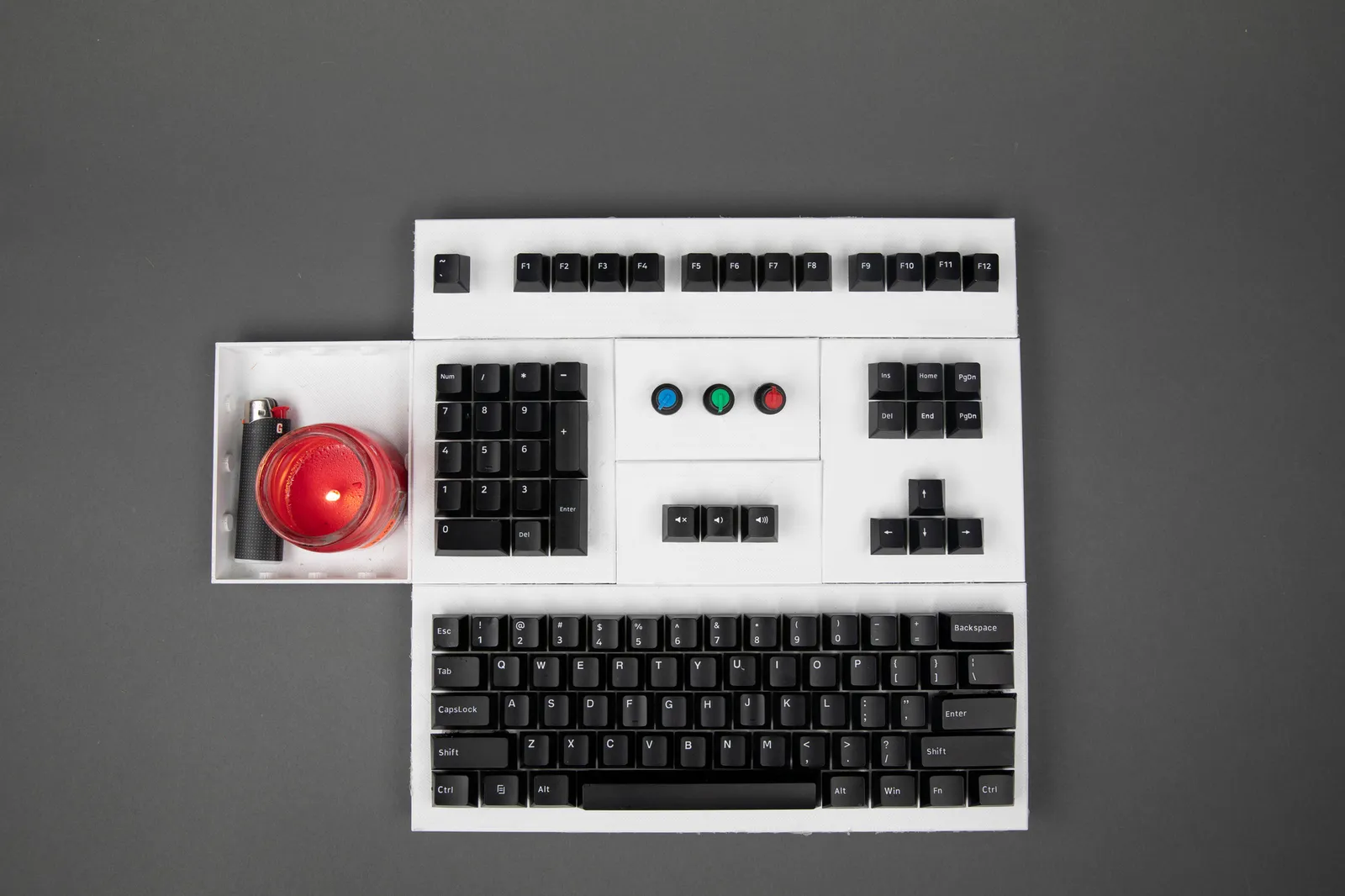
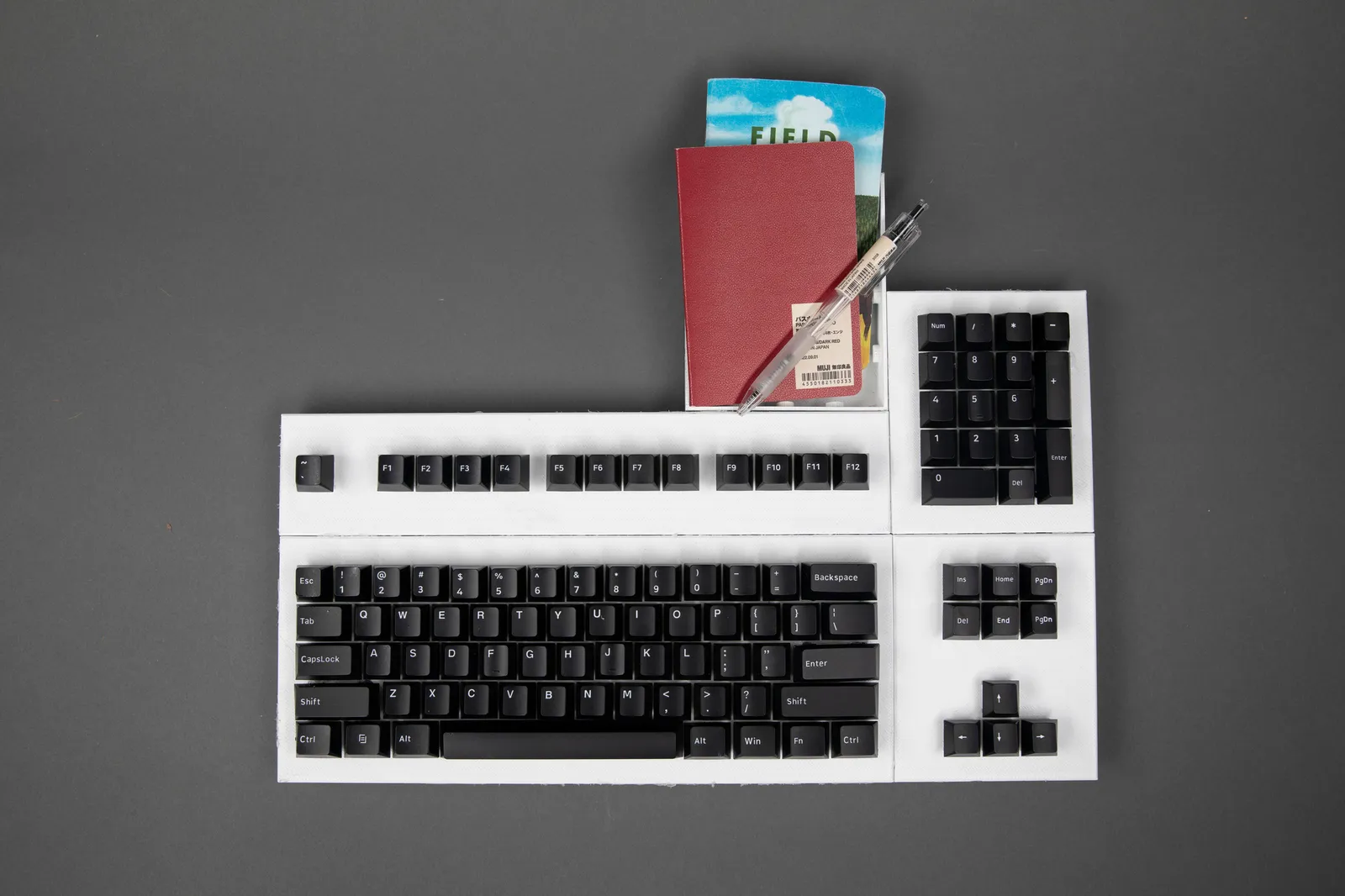
With that feedback, I designed housings in Autodesk Fusion 360. I started from a 2D sketch of the layout, split each section of the keyboard into its own module, and modeled a housing for each. Every module has slots for small neodymium magnets, so the keyboard holds together firmly but can still be rearranged.
Pushing the design further
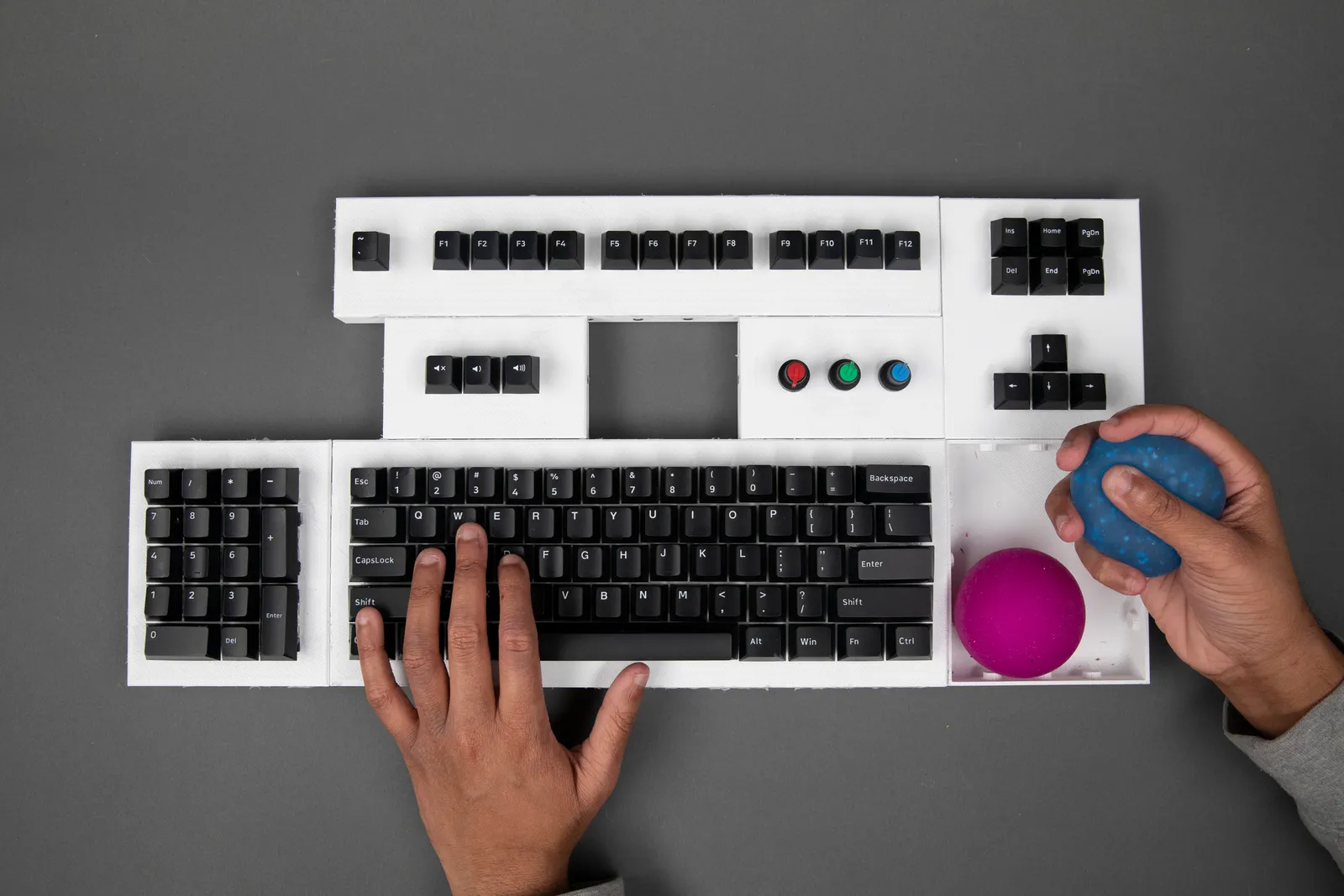
With help from LaGuardia Studio, I 3D printed the housings in ASA, which made them sturdy enough for real use. Beyond the main keyboard, my drafts included extra modules for everyday comfort. I surveyed 12 people about what they had or wanted on their desk, and turned common answers into modules that attach to the keyboard.
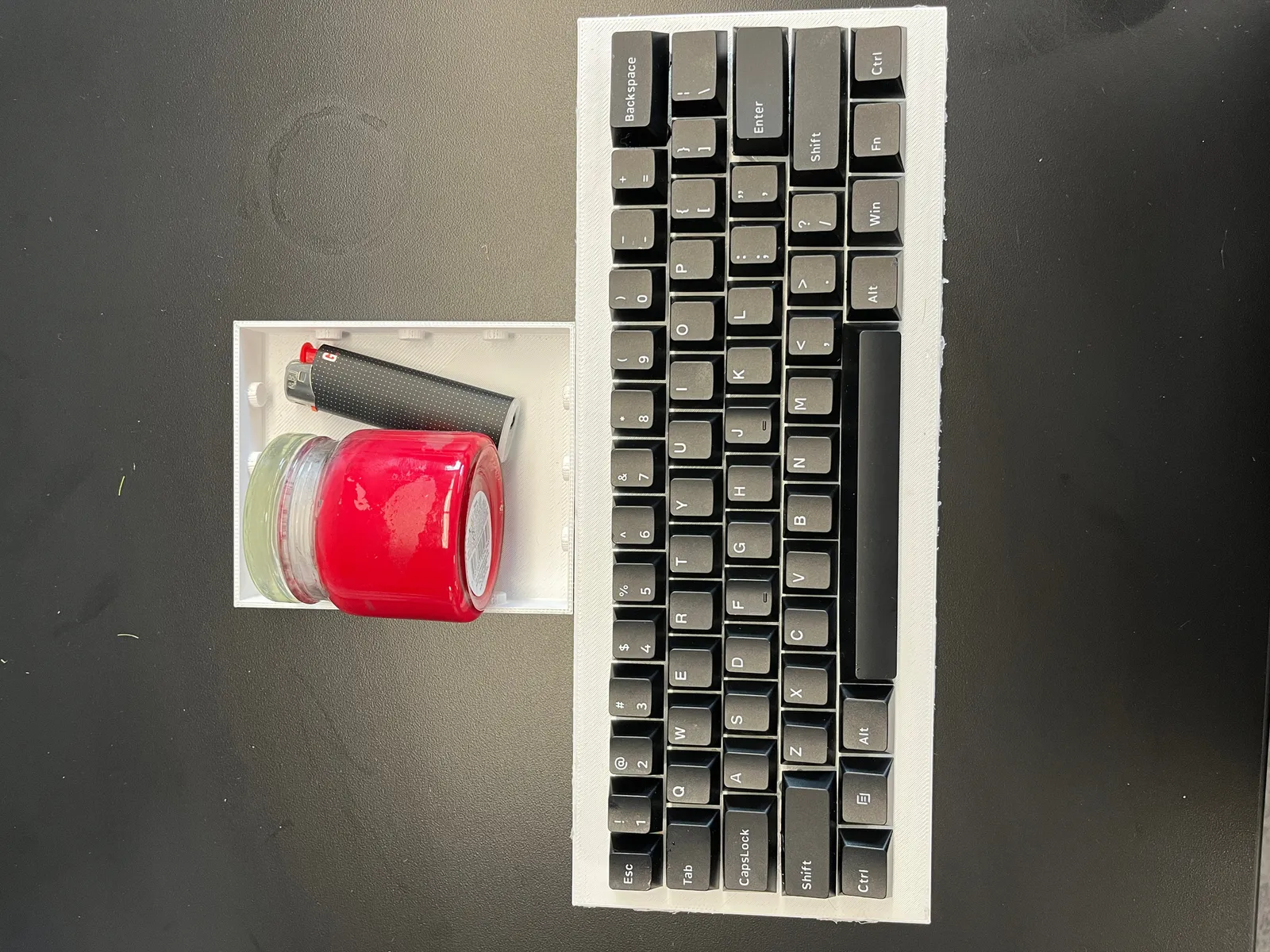
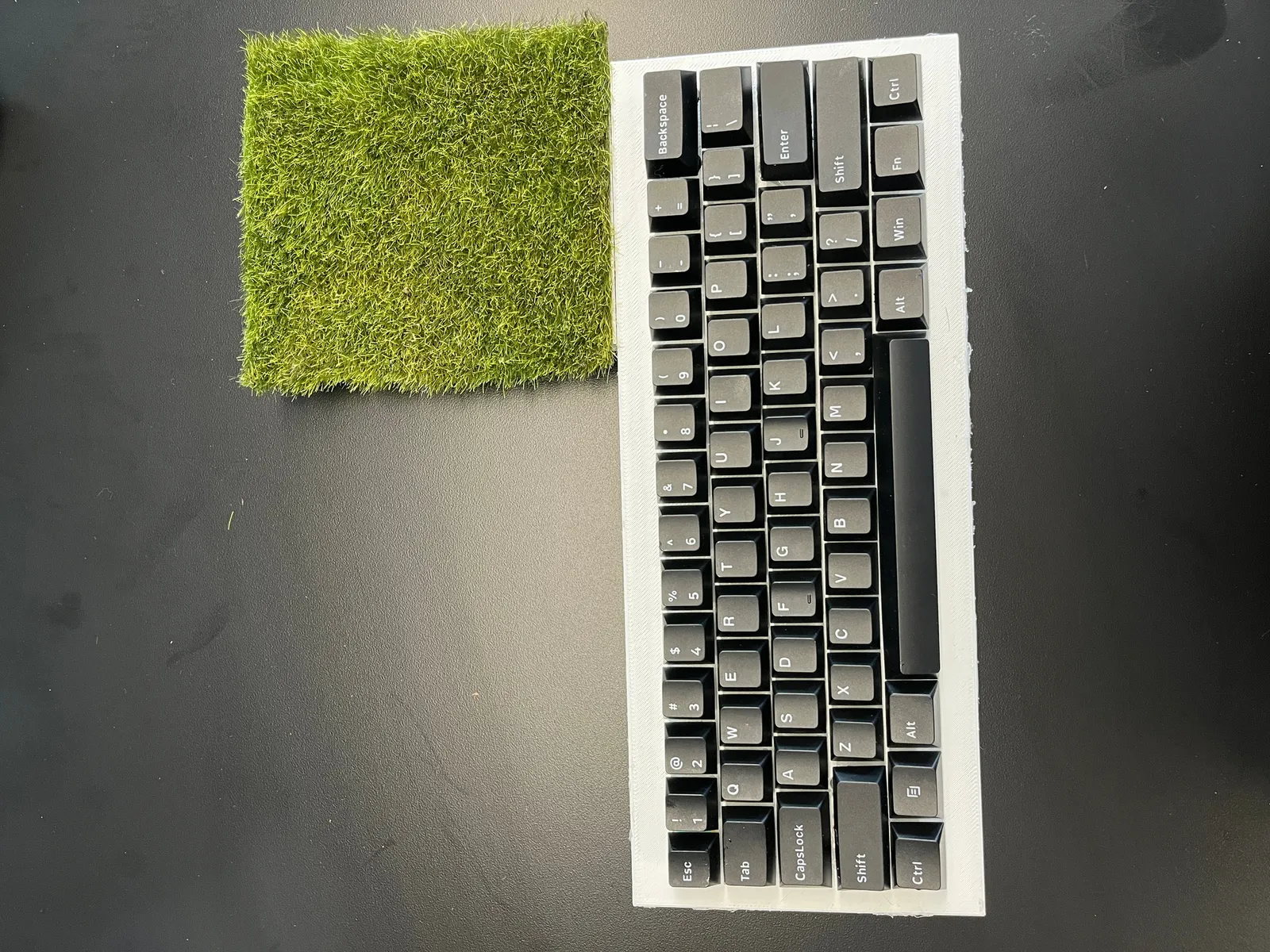
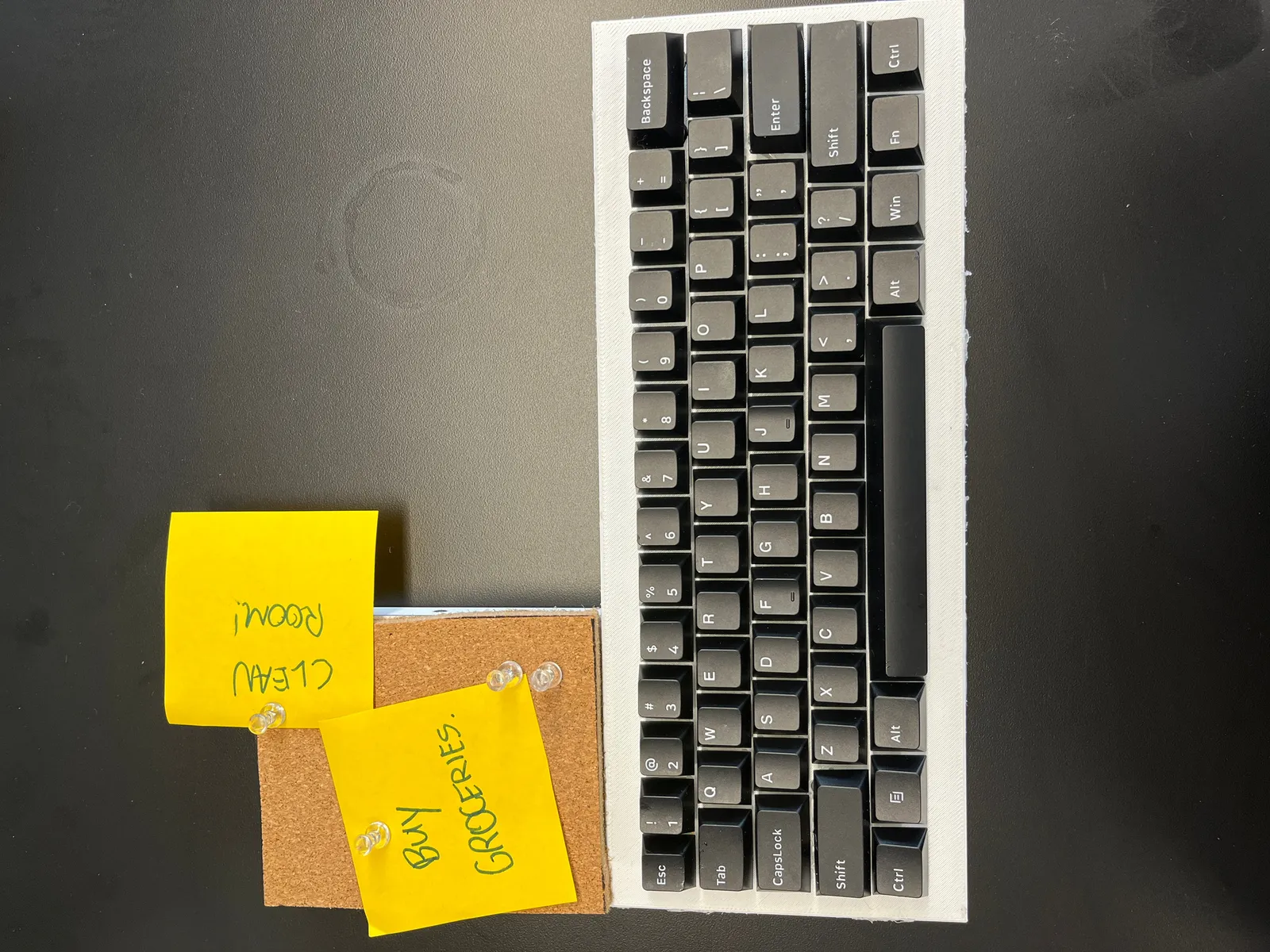
Final product
After almost a year of research and prototyping, the result was a modular keyboard held together by magnets, so you can rethink and arrange how you type.
Takeaways and next steps
This project grew out of three years of tinkering with keyboards, including a year of exploratory design and a year on the thesis itself. I want to do much more with it, and I think the design is ready for simple manufacturing and more prototyping. It stopped at the prototype stage, and since then many products have used modular systems in similar ways.
What I learned:
- Redesign the empty module so people understand how to use it.
- Plan for how PCBs fit inside, and redesign the modules to take screws and boards.
- Test more, and gather data on how people want to rearrange their keyboards.
Next Steps:
- Better module housings.
- PCBs that support the modular layout.
- Packaging.
Credits
Christina Dacanay Alexandra Palocz Tinrey Wang Capstone Class 23’ LaGuardia Studio Andrew Buckland Dhemerae Ford Sharan Mohanadoss Balaguru Andriana Mereuta Phil Caridi Luke Bunn Leia Chang Paul Mandel Parker Blumenberg August Luhrs Marlon Evans